News

Mar 2, 2016 by Enrico de Lazaro

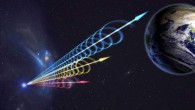
For the first time, astronomers have detected repeating short bursts of radio waves — so-called fast radio bursts — coming from an extremely powerful extragalactic object. Artist conception of a powerful neutron star, one of the proposed sources for fast radio bursts. Image credit: L. Calçada / ESO. Fast radio bursts (FRBs) are mysterious and rarely detected bursts of energy from space. They have durations of milliseconds and exhibit...
Mar 2, 2016 by News Staff

According to Dr. Martin Smith, a paleontologist at Durham University, UK, a fossil dating from the Silurian period of the Palaeozoic era, about 440 million...

Mar 2, 2016 by News Staff

RCW 106, a vast cloud of gas and dust, along with its rich and fascinating surroundings, are captured in this incredible photo from ESO’s VLT Survey...

Mar 1, 2016 by News Staff

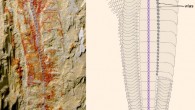
The first gene identified for graying hair has been discovered by an international team of researchers. At the top are shown drawings illustrating the...

Mar 1, 2016 by Enrico de Lazaro

A partially preserved femur from the Kem Kem beds of Morocco has revealed the size of a large-bodied theropod dinosaur called abelisaur. An artist’s...

Mar 1, 2016 by News Staff

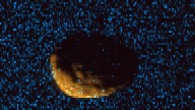
This false-color image of Phobos, the larger and inner of the two natural satellites of Mars, was taken by the Imaging Ultraviolet Spectrograph instrument...

Feb 29, 2016 by News Staff

A team of paleontologists led by Yunnan University scientist Xi-guang Zhang has unearthed one of the oldest fossils of the central nervous system yet found. Complete...

Feb 29, 2016 by News Staff

The subject of this Hubble image is Hen 2-80, a star located in the constellation Crux at a distance of approximately 2,300 light-years away from Earth. The...

Feb 29, 2016 by Enrico de Lazaro

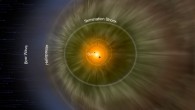
Using data from NASA’s Interstellar Boundary Explorer (IBEX), researchers have accurately determined the strength and direction of the magnetic field...

Feb 27, 2016 by Natali Anderson

A new species of the plant genus Rafflesia – R. consueloae — has been described from the Philippine Island of Luzon by a team of scientists led...

Feb 26, 2016 by News Staff

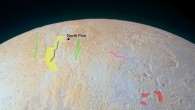
This enhanced color image of Pluto’s north polar area was taken by New Horizons’ Ralph/Multispectral Visible Imaging Camera on July 14, 2015, from...

Feb 26, 2016 by Sergio Prostak

Physicists on the DZero international collaboration at Fermilab, the U.S. Department of Energy’s laboratory specializing in high-energy particle physics,...

Feb 26, 2016 by News Staff

An 11,000-year-old engraved shale pendant has been found during excavations at the Early Mesolithic site of Star Carr, UK. 11,000-year-old engraved shale...

Feb 25, 2016 by News Staff

Sea sponges appeared on our planet about 640 million years ago, much earlier than any other animal, according to a study published this week in the Proceedings...

Feb 25, 2016 by News Staff

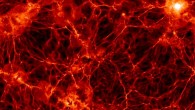
Cosmic voids — vast underdense regions, forming an essential feature of the cosmic web and occupying most of the volume of the Universe — could...

Feb 25, 2016 by Enrico de Lazaro

An international team of astronomers reported today that they had tracked down the location of a so-called fast radio burst (FRB), a mysterious and rarely...

Feb 24, 2016 by News Staff

Archaeologists from Tel Aviv University and the Israel Antiquities Authority have uncovered an extensive fabric collection in the ancient copper mines...

Feb 24, 2016 by Sergio Prostak

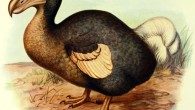
According to a new study in the Zoological Journal of the Linnean Society, an extinct bird known as the dodo (Raphus cucullatus) was in fact relatively...

Feb 24, 2016 by News Staff

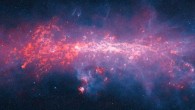
Using the Atacama Pathfinder Experiment (APEX), a 12-m radio telescope at 5,100 m altitude in the Chilean Atacama desert, astronomers have mapped the full...

Feb 23, 2016 by News Staff

Messier 90, the brightest galaxy in the Virgo Cluster, has a 300,000 light-year-long tail of diffuse ionized gas flowing from it, says an international...