News

Feb 15, 2016 by News Staff

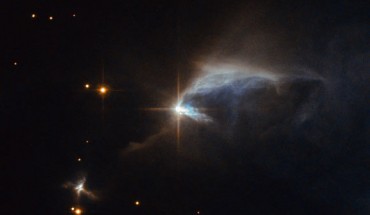
The NASA/ESA Hubble Space Telescope has captured a remarkable image of a reflection nebula known as IRAS 00044+6521. This Hubble ACS image shows the irregular reflection nebula IRAS 00044+6521. Image credit: NASA / ESA / Hubble / Judy Schmidt, www.geckzilla.com. IRAS 00044+6521, also known as IRCO 1971, GN 00.04.4 or PP 1, is an irregular reflection nebula in the constellation Cassiopeia. It is approximately 2,700 light-years from Earth. Reflection...
Feb 12, 2016 by News Staff

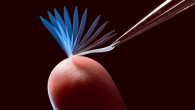
A group of scientists at the University of Rochester has created a polymer material that undergoes a shape change that can be triggered by body temperature. A...

Feb 12, 2016 by Natali Anderson

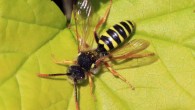
A team of biologists and robotic researchers from Australia and Germany has solved a mystery of how wasps make sure that they find their way home. The...

Feb 12, 2016 by News Staff

A large team of scientists led by Vanderbilt University geneticist John Capra has found surprising correlations between Neanderthal-derived DNA and disease...

Feb 11, 2016 by News Staff

For the first time, physicists have observed ‘ripples’ in the fabric of space-time called gravitational waves. The collision of two black holes is...

Feb 10, 2016 by News Staff

According to a group of researchers at the University of Sussex in Brighton, UK, domestic horses (Equus caballus) are able to distinguish between positive...

Feb 10, 2016 by Enrico de Lazaro

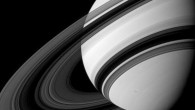
This image, captured by Cassini’s wide-angle camera, was photographed when the mission was 40,000 miles (65,000 km) from Tethys, and Saturn and its rings...

Feb 10, 2016 by Enrico de Lazaro

Various species and subspecies of canids (wolves, coyotes, etc.) have distinguishing repertoires of howling, according to a team of scientists who analyzed...

Feb 10, 2016 by News Staff

An infant star lights up the nebula IC 2631 in this remarkable new image from the MPG/ESO 2.2-m telescope at ESO’s La Silla Observatory, Chile. This...

Feb 9, 2016 by News Staff

Almost 900 hidden nearby galaxies have been studied by an international team of astronomers, shedding new light on the Great Attractor — a diffuse...

Feb 9, 2016 by Natali Anderson

According to a study published in the journal eLife, cyanobacteria cells act as spherical microlenses, allowing the cell to see a light source and move...

Feb 9, 2016 by Enrico de Lazaro

Archaeologists in Sweden say they have uncovered the remains of a 9,200-year-old storage for fermented fish. Archaeologists discovered the remains of a...

Feb 9, 2016 by Enrico de Lazaro

A group of paleontologists from the United States, the UK and China has discovered two new suspension-feeding species of the bony fish genus Rhinconichthys. Artist’s...

Feb 8, 2016 by News Staff

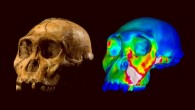
According to a study published today in the journal Nature Communications, a recently discovered species of early human ancestor called Australopithecus...

Feb 8, 2016 by News Staff

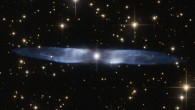
The NASA/ESA Hubble Space Telescope has captured this vivid image of the startlingly symmetrical nebula Hen 2-437. This Hubble image shows the young planetary...

Feb 5, 2016 by News Staff

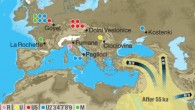
DNA evidence lifted from the bones and teeth of hunter-gatherers who lived in Europe from 35,000 years ago (Late Pleistocene) to 7,000 years ago (early...

Feb 5, 2016 by News Staff

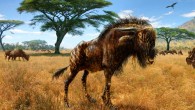
Rusingoryx atopocranion — a little-known wildebeest-like bovid that lived in equatorial East Africa 100,000 – 50,000 years ago (late Pleistocene)...

Feb 5, 2016 by Enrico de Lazaro

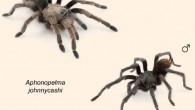
A team of researchers, directed by Dr. Chris Hamilton of the Auburn University Museum of Natural History, has discovered a previously unknown species of...

Feb 5, 2016 by News Staff

A team of planetary researchers from the United States has found surprisingly little correlation between how dense a Saturn’s ring might appear to be...

Feb 4, 2016 by News Staff

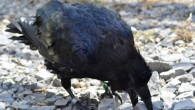
According to a new study published in the journal Nature, ravens (Corvus corax) share human ability to think abstractly about other minds, adapting their...