News

Mar 11, 2016 by Sergio Prostak

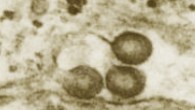
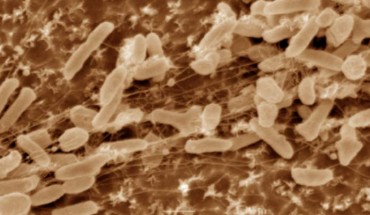
According to a group of biologists in Japan, the newfound species — named Ideonella sakaiensis 201-F6 — breaks down the plastic by using two enzymes to hydrolyze poly[ethylene terephthalate], or PET. This false-color SEM (scanning electron microscopy) image shows Ideonella sakaiensis. Image credit: Shosuke Yoshida et al. PET is a condensation polymer used in plastic that is highly resistant to biodegradation. It is industrially produced...
Mar 10, 2016 by News Staff

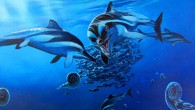
According to a new research published in the journal Nature Communications, ichthyosaurs were driven to extinction by climate change and their own failure...

Mar 10, 2016 by News Staff

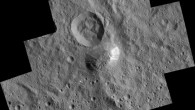
This incredible mosaic of images from NASA’s Dawn orbiter shows one of Ceres’ most intriguing features — a mysterious mountain called Ahuna Mons. Ahuna...

Mar 10, 2016 by News Staff

Life in what is now Tanzania was difficult and dangerous 1.8 million years ago, according to a team of scientists from the United States, Switzerland and...

Mar 9, 2016 by Enrico de Lazaro

A team of archaeologists from the Israel Antiquities Authority (IAA) has discovered a large winery dating to the Byzantine period in Jerusalem. Dr. Wiegmann...

Mar 9, 2016 by News Staff

A group of scientists at Boston College, Chestnut Hill, has reconstructed the natural history of a specific retrovirus lineage — ERV-Fc — that...

Mar 9, 2016 by News Staff

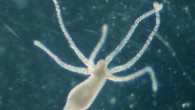
Researchers at the University of California have uncovered in detail the dynamic process that allows the hydra — a simple freshwater animal famous...

Mar 9, 2016 by News Staff

ESO’s Very Large Telescope Interferometer (VLTI) at Paranal Observatory, Chile, has taken the sharpest image ever seen of the disc of gas and dust around...

Mar 8, 2016 by Natali Anderson

Japanese tits combine their calls using specific rules to communicate important compound messages, says an international group of ornithologists led by...

Mar 8, 2016 by News Staff

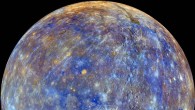
According to a team of planetary scientists led by Dr. Patrick Peplowski of the Johns Hopkins University Applied Physics Laboratory, planet Mercury’s...

Mar 7, 2016 by News Staff

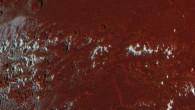
This newly released image from NASA’s New Horizons spacecraft shows a chain of snowcapped mountains in Pluto’s Cthulhu Regio. Methane snow-capped mountains...

Mar 7, 2016 by Natali Anderson

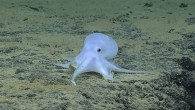
A team of marine scientists working off the northeast coast of Necker Island, the Hawaiian Archipelago, has encountered a new-to-science species of deep-sea...

Mar 7, 2016 by News Staff

This parallel field observation from NASA’s Hubble Space Telescope reveals a diverse collection of galaxies in the direction of the constellation Sculptor. This...

Mar 4, 2016 by News Staff

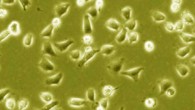
A team of researchers led by Michigan State University biochemist and molecular biologist Amy Ralston has discovered a new kind of stem cell — induced...

Mar 4, 2016 by Natali Anderson

Neanderthals living in what is now France may have used powdered manganese dioxide for fire making purposes, according to a new study published in the...

Mar 4, 2016 by News Staff

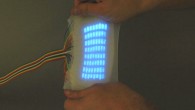
A team of scientists led by Dr. Rob Shepherd from Cornell University, Ithaca, has developed an artificial octopus-like skin that can stretch, sense internal...

Mar 3, 2016 by Sergio Prostak

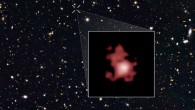
Using the NASA/ESA Hubble Space Telescope, astronomers have found a surprisingly bright, infant galaxy 13.4 billion light-years from us, making it the...

Mar 3, 2016 by News Staff

Long-legged wading birds that nest above resident American alligators (Alligator mississippiensis) for protection from mammalian nest predators may also...

Mar 3, 2016 by Enrico de Lazaro

A team of professional, student and volunteer archaeologists led by the University of Sheffield has unearthed evidence of a nearly 1,350-year-old Anglo-Saxon...

Mar 2, 2016 by News Staff

A new study in rats led by Dr. Beth Allison of the University of Cambridge, UK, suggests that the aging clock begins ticking even before we are born and...