News

Mar 28, 2016 by News Staff

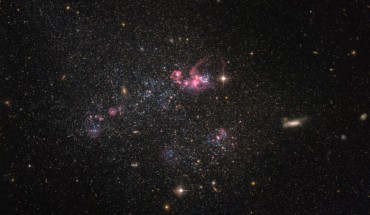
NASA’s Hubble Space Telescope has captured a striking new photo of UGC 4459, a type of galaxy known as an irregular dwarf galaxy. This image, taken by NASA’s Hubble Space Telescope, shows an irregular dwarf galaxy known as UGC 4459, lying about 12 million light-years away in the constellation Ursa Major. Image credit: NASA / ESA / Hubble / Judy Schmidt, www.geckzilla.com. UGC 4459, otherwise known as LEDA 24050, DDO 53 and VV 499, is a small galaxy...
Mar 25, 2016 by Natali Anderson

An international team of scientists, led by Dr. Brooke Flammang from New Jersey Institute of Technology, has identified unique anatomical features in a...

Mar 25, 2016 by News Staff

A multinational team of scientists has created the first 3D atlas of the skeletal anatomy of the dodo (Raphus cucullatus), based upon two exceptional skeletons. The...

Mar 25, 2016 by News Staff

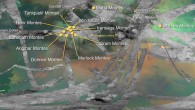
Planetary researchers with NASA’s Cassini mission have identified the highest point on Titan, the largest moon of Saturn. Titan’s Mithrim Montes is...

Mar 24, 2016 by Sergio Prostak

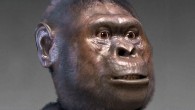
Fieldwork at the Pliocene site of Kantis, Kenya, has yielded fossilized teeth and forearm bone attributable to Australopithecus afarensis, a hominid species...

Mar 24, 2016 by News Staff

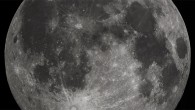
Earth’s moon wandered off its original axis about 3 billion years ago, a new study led by Southern Methodist University planetary researcher Matt Siegler...

Mar 24, 2016 by News Staff

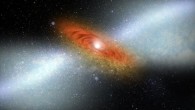
Researchers appear to have an explanation for a longstanding question in astrophysics: why did the pace of star formation in the Universe slow down 11...

Mar 23, 2016 by Natali Anderson

Scientists led by Dr. Marcelo Andrade of the Universidade Federal do Para report that they have discovered a new species of omnivorous freshwater fish...

Mar 23, 2016 by Natali Anderson

According to a study led by University College London researcher William Dunn, the solar wind is causing intense X-ray bursts over Jupiter’s polar regions. Solar...

Mar 23, 2016 by Enrico de Lazaro

Nineteen previously unidentified pieces of non-human DNA — left by retroviruses that first infected human ancestors hundreds of thousands of years...

Mar 23, 2016 by News Staff

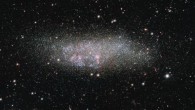
Using the OmegaCAM wide-field imager, a large camera mounted on ESO’s VLT Survey Telescope, astronomers have captured this vivid image of a small galaxy...

Mar 22, 2016 by News Staff

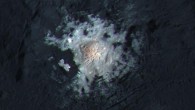
Planetary researchers from NASA’s Dawn mission have released new images of the dwarf planet Ceres, including anticipated views of its intriguing ‘bright...

Mar 22, 2016 by News Staff

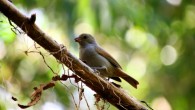
Birds living in urban environments are smarter than their country counterparts, says a group of ornithologists at McGill University in Montreal, Canada. The...

Mar 22, 2016 by News Staff

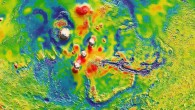
A team of researchers led by Dr. Antonio Genova of NASA’s Goddard Space Flight Center has released a detailed new map of Mars’ gravity. This view of...

Mar 22, 2016 by Enrico de Lazaro

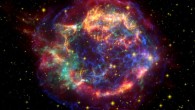
An international group of astronomers, led by Prof. Peter Garnavich from the University of Notre Dame, has caught two Type II supernovae at the moment...

Mar 21, 2016 by News Staff

HD 20782b’s orbit closely resembles that of a comet, making it the most eccentric planet ever known. This artist’s rendering shows HD 20782b, the most...

Mar 21, 2016 by News Staff

According to an international team of physical chemists, led by University of Luxembourg researcher Prof. Alexandre Tkatchenko, intermolecular attractions...

Mar 21, 2016 by News Staff

Astronomers have taken a stunning photo of a very massive cluster of galaxies, MACS J0416.1-2403. This image of the galaxy cluster MACS J0416 combines...

Mar 19, 2016 by Sergio Prostak

A new species of dromaeosaurid (raptor) dinosaur — Boreonykus certekorum — that thrived in the cold has been discovered in a remote part of...

Mar 18, 2016 by News Staff

A team of scientists led by Dr. Patrick Ogle from the California Institute of Technology has discovered a new type of galaxy called a super spiral. Images...