News

Dec 7, 2012 by Sergio Prostak

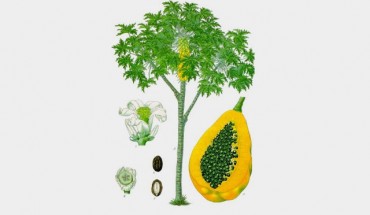
A computational analysis of the genomes of the papaya, poplar, grape, and a small flowering plant called Arabidopsis thaliana, has identified hundreds of 100-million-year-old non-coding DNA sequences shared between these plants. These conserved non-coding sequences, discovered by an international group of biologists, are not genes, but are located in the promoters upstream of genes and are around 100 DNA base pairs in length. As the papaya, poplar,...


Dec 6, 2012 by Sergio Prostak

An international group of astronomers using the Submillimeter Array and the Combined Array for Millimeter-Wave Astronomy has found evidence of what might...

Dec 6, 2012 by Enrico de Lazaro

A new study by renowned Wits University archaeologist Prof Christopher Henshilwood provides first detailed summary of South African Middle Stone Age cultural...

Dec 6, 2012 by Sergio Prostak

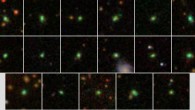
A team of astronomers, led by Dr Mischa Schirmer of the Gemini Observatory, using observations from ESO’s Very Large Telescope (VLT), the Gemini South...

Dec 5, 2012 by Enrico de Lazaro

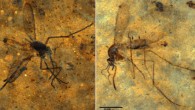
An international team of paleontologists has identified two ancient species of mosquitoes from so-called compression fossils found in the Kishenehn Basin,...

Dec 5, 2012 by Sergio Prostak

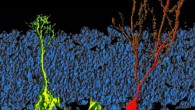
Scientists led by Prof Sebastian Jessberger of the University of Zurich’s Brain Research Institute, Switzerland, have discovered that neural stem cells...

Dec 5, 2012 by Enrico de Lazaro

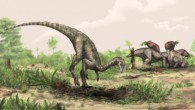
An international team of paleontologists has discovered what may be the world’s earliest dinosaur. According to the scientists, this creature, named...

Dec 4, 2012 by Natali Anderson

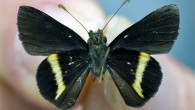
Entomologists have described a new species of skipper butterfly from Jamaica. Troyus turneri, a new species of skipper butterfly from Jamaica (Jeff Gage...

Dec 4, 2012 by Sergio Prostak

Six years of observations of the second planet from the Sun by ESA’s Venus Express show that changes in the planet’s atmosphere could be the result...

Dec 3, 2012 by Sergio Prostak

A team of researchers at the New York University’s Langone Medical Center has discovered that two genes, called Hoxa5 and Hoxc5, play a critical role...

Dec 3, 2012 by Natali Anderson

Biologists from the University of the Ryukyus in Okinawa, Japan, have found two new species of encrusting anemones, in unexpected locations. This is Neozoanthus...

Dec 1, 2012 by Sergio Prostak

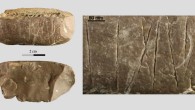
Chinese archaeologists have discovered a stunning 30,000-year-old engraved stone artifact in a collection of stone tools unearthed at the Paleolithic site...

Nov 30, 2012 by Sergio Prostak

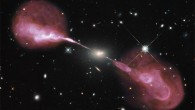
Astronomers using the Wide Field Camera 3 aboard NASA’s Hubble Space Telescope and the Karl G. Jansky Very Large Array radio telescope in New Mexico...

Nov 30, 2012 by Natali Anderson

The combined uranium/thorium/helium dating of minerals from the bottom of the Grand Canyon in Arizona, the United States, indicates it was largely carved...

Nov 30, 2012 by Sergio Prostak

An international team of scientists using NASA’s Chandra X-ray Observatory has discovered a jet of X-rays from a supermassive black hole about 12.4...

Nov 30, 2012 by Sergio Prostak

New data obtained with NASA’s MESSENGER spacecraft have provided evidence that water ice and deposits of organic material exist near the north pole...

Nov 29, 2012 by Sergio Prostak

An international team of astronomers has discovered a black hole that could shake the foundations of current models of galaxy evolution. This Hubble image...

Nov 29, 2012 by Enrico de Lazaro

Analysis of skeletal remains found in an island cave in Favignana, Italy, has revealed that modern humans first settled in Sicily around the time of the...

Nov 28, 2012 by Sergio Prostak

An international team of astronomers using ESO’s Very Large Telescope (VLT) has found a quasar with the most energetic outflow ever seen, at least five...

Nov 28, 2012 by Sergio Prostak

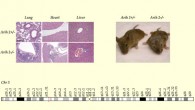
According to authors of a new study published in the journal Nature Immunology, a gene called the ariadne homolog 2 (Arih2) may hold the key to treating...