News

Dec 20, 2012 by Sergio Prostak

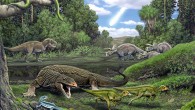
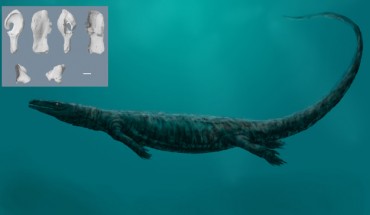
An international team of paleontologists has described a new species of mosasaur that lived in freshwater environments about 84 million years ago. According to scientists, the newly discovered species Pannoniasaurus inexpectatus is the first mosasaur to have lived in freshwater environments. This picture shows another species of mosasaur – Aigialosaurus bucchichi. The inset shows fossils of Pannoniasaurus inexpectatus found in Hungary, scale...

Dec 20, 2012 by Natali Anderson

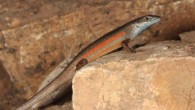
Australian biologists have discovered two new species of lizards – the Elegant Rainbow Skink (Carlia decora) and the Orange-flanked Rainbow Skink...

Dec 19, 2012 by Natali Anderson

Astronomers led by Dr Mikko Tuomi of the University of Hertfordshire have discovered that the nearby star Tau Ceti may host five exoplanets – with...

Dec 18, 2012 by Sergio Prostak

Scientists at the University of Chicago’s Department of the Geophysical Sciences and Enrico Fermi Institute have found the radioactive isotope iron-60...

Dec 18, 2012 by Sergio Prostak

Emotion helps us recognize words more accurately and quicker, however, we do not remember emotionally intoned speech as accurately as neutral speech, according...

Dec 17, 2012 by Sergio Prostak

According to an international team of astronomers, bright X-ray flares in nearby galaxies, once assumed to indicate the presence of black holes, can in...

Dec 14, 2012 by Sergio Prostak

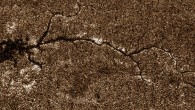
A miniature extraterrestrial version of the Nile River has been spotted on the largest moon of Saturn by ESA’s Cassini spacecraft. This Cassini image...

Dec 14, 2012 by Enrico de Lazaro

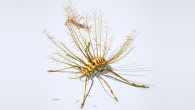
U.S.-Spanish scientists have found evidence of what they say is the oldest known camouflaging behavior in insects. This is an artist’s reconstruction...

Dec 14, 2012 by Sergio Prostak

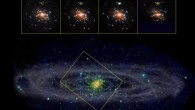
With the combined power of Earth-orbiting X-ray telescopes, including NASA’s Swift and ESA’s XMM-Newton, an international team of astronomers has...

Dec 14, 2012 by Enrico de Lazaro

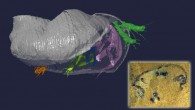
An international team of paleontologists has made an extremely rare discovery of a 425-million-year-old fossil ostracod crustacean with body, limbs, eyes,...

Dec 13, 2012 by Enrico de Lazaro

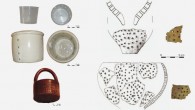
Scientists led by University of Bristol’s biogeochemist Prof Richard Evershed say they have evidence that humans in prehistoric Europe were making cheese...

Dec 13, 2012 by Sergio Prostak

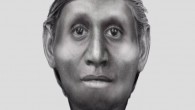
Dr Susan Hayes, a facial anthropologist and an honorary senior research fellow at the University of Wollongong in Australia, has reported results of the...

Dec 13, 2012 by Natali Anderson

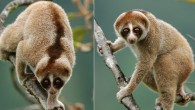
U.S. biologists have discovered a new species of slow loris in the jungles of Borneo. This is the Kayan loris (Ch’ien Lee / wildborneo.com.my) Slow...

Dec 12, 2012 by Sergio Prostak

While most Americans replace the T sound in words like ‘mountain’ through their noses, Utahns replace it through their mouths, say linguists at the...

Dec 12, 2012 by Sergio Prostak

According to an international group of astronomers led by Dr Peter Tuthill of the Sydney Institute for Astronomy, Vega – the brightest star in the...

Dec 11, 2012 by Sergio Prostak

A new study published online in the Proceedings of the National Academy of Sciences shows that the Chicxulub asteroid collision, widely thought to have...

Dec 11, 2012 by Sergio Prostak

Researchers at the University of California in Berkeley have identified a gene that helps our body convert dietary carbohydrates into fat. The discovery...

Dec 11, 2012 by Sergio Prostak

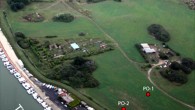
European archaeologists believe they have finally found the exact location of the river harbor of Ostia. This is an aerial view of Ostia and the position...

Dec 10, 2012 by Sergio Prostak

An international team of astronomers using the Wide Field Camera 3 and the Wide Field and Planetary Camera 2 aboard NASA’s Hubble Space Telescope has...

Dec 10, 2012 by Enrico de Lazaro

A five-year study by British archaeologists sheds new light on the enigmatic drawings created by the Nazca people between 100 BC and CE 700 in the Peruvian...