News

Jun 13, 2014 by News Staff

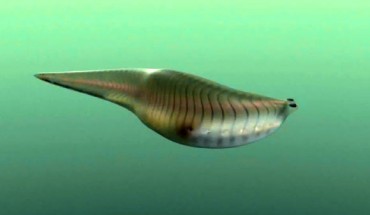
Several fossil specimens of a Cambrian fish called Metaspriggina walcotti recently discovered in Canada shed new light on the development of the earliest vertebrates, including the origin of jaws. Reconstruction of Metaspriggina walcotti. Image credit: M. Collins. Fish fossils from the Cambrian period are very rare and usually poorly preserved. Previously, only two incomplete specimens of Metaspriggina walcotti had been identified. About 44 well-preserved...
Jun 13, 2014 by News Staff

Dinosaurs fit in between warm-blooded mammals and cold-blooded reptiles, according to a study reported in the journal Science. The study is the first to...

Jun 13, 2014 by News Staff

A large international team of scientists has sequenced and analyzed the 640 million base pair genome of Eucalyptus grandis (known as the Flooded Gum or...

Jun 12, 2014 by Enrico de Lazaro

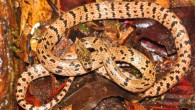
Herpetologists from Fauna & Flora International (FFI) and Zoological Research Museum Alexander Koenig in Germany have described a new species of wolf...

Jun 11, 2014 by News Staff

According to a study led by Dr Marcel Pawlowski of Case Western Reserve University in Ohio, dwarf galaxies that orbit our Milky Way Galaxy and the Andromeda...

Jun 10, 2014 by News Staff

Bromine – an element with atomic number 35 and the chemical symbol Br – is the 28th chemical element essential for tissue development in humans...

Jun 10, 2014 by News Staff

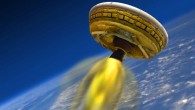
Engineers and scientists from NASA’s Low-Density Supersonic Decelerator project are about to test a new technology for landing heavy payloads on...

Jun 10, 2014 by News Staff

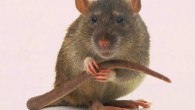
According to a new study published in the journal Nature Neuroscience, rats can feel regret – a cognitive behavior once thought to be uniquely human. Rats...

Jun 10, 2014 by News Staff

A supercomputer program dubbed ‘Eugene Goostman’ has passed the iconic Turing Test by fooling human judges into thinking they were talking to a 13-year-old...

Jun 9, 2014 by News Staff

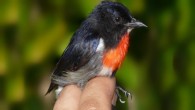
A group of ornithologists from Trinity College Dublin, Ireland, has described a new species of flowerpecker from the Wakatobi Islands of Indonesia, off...

Jun 9, 2014 by News Staff

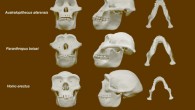
Hominin faces – especially those of australopithecines – evolved to minimize injury from punches to the face during fights between males –...

Jun 6, 2014 by News Staff

Genetic researchers from the International Sheep Genomics Consortium have sequenced the complete genome of domestic sheep (Ovis aries). Domestic sheep....

Jun 6, 2014 by News Staff

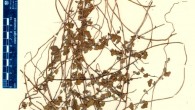
Biologists have described a new species of moonseed plant from the dry forests and transient sand dunes of Bolivia and Paraguay. Cissampelos arenicola,...

Jun 6, 2014 by News Staff

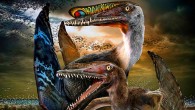
Paleontologists have discovered remains of about 40 male and female individuals of a new pterosaur species with five exceptionally well-preserved 3D eggs...

Jun 6, 2014 by News Staff

A study published in the journal Science provides new evidence that the Moon formed from the catastrophic collision of the proto-Earth with a hypothetical...

Jun 5, 2014 by News Staff

A series of previously unnoticed images consisting of paintings of boats, animals, deities and buildings has been discovered on the walls of Cambodia’s...

Jun 5, 2014 by News Staff

HV 2112 – a giant, variable star in a nearby galaxy known as the Small Magellanic Cloud – represents a long-sought class of stars called Thorne-Zytkow...

Jun 5, 2014 by News Staff

Individuals who speak two or more languages, even those who acquired the second language in adulthood, may slow down cognitive decline from aging, according...

Jun 5, 2014 by News Staff

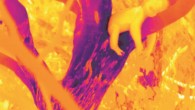
 Koalas (Phascolarctos cinereus) cope with extreme heat by resting against cooler tree trunks, according to a new study led by Dr Michael Kearney from...

Jun 4, 2014 by News Staff

The Hubble Ultra Deep Field 2014 – the most colorful and comprehensive picture ever assembled of the evolving Universe – has been captured...