News

May 12, 2015 by News Staff

Using the fossil record as a guide, a team of scientists led by Prof Arhat Abzhanov of Harvard University has successfully replicated the molecular processes that led from dinosaur snouts to the first bird beaks. The scientists have grown dinosaur-like snouts on chicken embryos in a lab. Image credit: Dinosaur-world.com. The researchers successfully replicated ancestral molecular development to transform chicken embryos in a laboratory into specimens...

May 12, 2015 by News Staff

Paleontologist Steven Jasinski of the University of Pennsylvania has described a new species of dromaeosaurid dinosaur that roamed what is now New Mexico...

May 12, 2015 by News Staff

According to a new study published in the journal Nature Communications, the underlying physical process that creates ‘breaking wave’ cloud patterns...

May 11, 2015 by News Staff

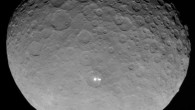
NASA’s Dawn probe has returned the sharpest images ever seen of the mysterious bright spots on the dwarf planet Ceres. The images were taken 8,400 miles...

May 11, 2015 by News Staff

A group of scientists at the University of Leuven in Belgium has developed a novel method for the recovery and separation of two rare earth elements –...

May 11, 2015 by News Staff

Previously, the dawn of the Viking Age has been dated to a June 793 raid by Norwegian Vikings on Lindisfarne. But a new study, led by Dr Steve Ashby of...

May 11, 2015 by News Staff

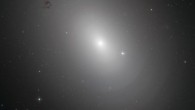
Astronomers using the Advanced Camera for Surveys on the NASA/ESA Hubble Space Telescope have imaged an unusual elliptical galaxy called NGC 3923. This...

May 11, 2015 by News Staff

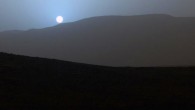
This awesome-looking time-lapse sequence of the Martian sunset was created by piecing together images taken by NASA’s Mars rover Curiosity. NASA’s...

May 8, 2015 by News Staff

New observations of the remnant of Supernova (SN) 1987A from NASA’s Nuclear Spectroscopic Telescope Array (NuSTAR) are confirming predictions made at...

May 8, 2015 by News Staff

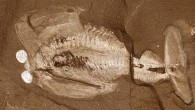
Dr Javier Ortega-Hernández of the University of Cambridge, UK, has discovered one of the oldest fossil brains ever found, and used it to help identify...

May 8, 2015 by News Staff

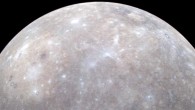
New data from NASA’s MESSENGER orbiter suggest that Mercury’s magnetic field is 3.7 – 3.9 billion years old. This image was taken on January...

May 8, 2015 by News Staff

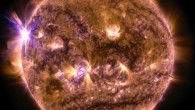
Astronomers using NASA’s Solar Dynamics Observatory captured stunning images of a significant solar flare on May 5, 2015. The Sun emitted an X2.7-class...

May 8, 2015 by News Staff

Astronomers using the Cosmic Origins Spectrograph (COS) on the NASA/ESA Hubble Space Telescope have discovered that a nearly invisible halo of hot plasma...

May 7, 2015 by News Staff

Astronomers using Japan Aerospace Exploration Agency’s AKARI Space Observatory have captured a stunning image of the central regions of the Cygnus constellation. AKARI...

May 7, 2015 by News Staff

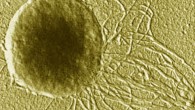
A team of biologists, co-led by Dr Lionel Guy and Dr Thijs J. G. Ettema from Uppsala University in Sweden, has discovered a new group of microorganisms...

May 7, 2015 by News Staff

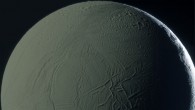
Two new studies using data from NASA’s Cassini spacecraft reveal the pH of water spewing from a geyser-like plume on Enceladus, and suggest that much...

May 7, 2015 by News Staff

A new study published online in the journal ACS Applied Materials & Interfaces provides information that could help chocolatiers prevent a whitish...

May 7, 2015 by News Staff

Onion artificial muscles can either expand or contract to bend in different directions depending on the driving voltage applied, says a group of scientists...

May 6, 2015 by News Staff

An international team of paleontologists has described a new ornithuromorph bird that lived during the Hauterivian stage of the Early Cretaceous epoch,...

May 6, 2015 by News Staff

Scientists at the Southwest Research Institute say they have visually captured the sound waves created by lightning. Acoustic signature of thunder. Image...