News

May 18, 2015 by News Staff

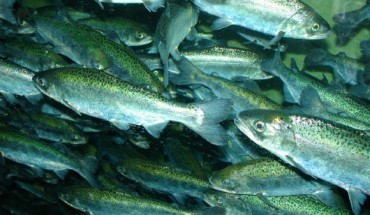
A chemical signature recorded on otoliths (ear bones) of Chinook salmon could tell scientists where the fish lived, says a new study published in the journal Science Advances. Chinook salmon (Oncorhynchus tshawytscha). Image credit: Zureks / CC BY-SA 3.0. “Each fish has this little recorder, and we can reveal the whole life history of the fish from the perspective of the otolith,” explained Dr Sean Brennan of the University of Washington, who...

May 18, 2015 by News Staff

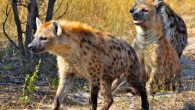
According to a team of scientists led by Dr Amiyaal Ilany of the University of Pennsylvania, spotted hyenas (Crocuta crocuta) prefer to have friendship...

May 18, 2015 by News Staff

Astronomers using the Wide Field Camera 3 and the Advanced Camera for Surveys on the NASA/ESA Hubble Space Telescope have captured an image of a titanic...

May 15, 2015 by News Staff

According to new research published online today in the journal Science, sex equality in residential decision-making explains the unique social structure...

May 15, 2015 by News Staff

Astronomers using NASA’s Hubble Space Telescope have captured snapshots of fledging white dwarfs beginning their slow-paced, 40-million-year migration...

May 15, 2015 by News Staff

A new study published in the journal Current Biology shows that the response of fruit flies (Drosophila sp.) to visual threats includes many essential...

May 15, 2015 by News Staff

Astronomers using two 10-m optical/infrared telescopes at the W. M. Keck Observatory have discovered the first quadruple quasar, catalogued as SDSS J0841+3921. This...

May 15, 2015 by News Staff

A team of researchers led by Dr Nicholas Wegner of NOAA Fisheries’ Southwest Fisheries Science Center has discovered a whole-body form of endothermy...

May 14, 2015 by News Staff

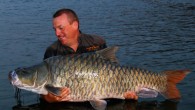
The hump-backed mahseer (Hypselobarbus mussullah) – one of the world’s most iconic freshwater fish – is on the brink of extinction, says...

May 14, 2015 by News Staff

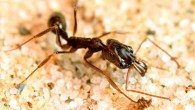
Trap-jaw ants can use their powerful mandibles to hurl themselves out of harm’s way when an antlion stalks, says a team of entomologists at the University...

May 14, 2015 by News Staff

According to a new study published in the journal Nature, the primary mechanism for stopping star formation in galaxies is the so-called ‘strangulation,’...

May 14, 2015 by News Staff

An international group of astronomers using ESO’s Very Large Telescope at the Paranal Observatory in northern Chile has discovered a never-seen-before...

May 14, 2015 by News Staff

The CMS (Compact Muon Solenoid) and LHCb (Large Hadron Collider beauty) collaborations at CERN’s Large Hadron Collider in Switzerland report the first...

May 13, 2015 by News Staff

A team of scientists led by Prof Martin Zwierlein of MIT-Harvard Center for Ultracold Atoms and Research Laboratory of Electronics has built a microscope...

May 13, 2015 by News Staff

NASA’s New Horizons spacecraft has captured images of four small moons of Pluto – Hydra, Nix, Kerberos and Styx. Hydra (red), Nix (yellow), Kerberos...

May 13, 2015 by News Staff

A new study published in the Geophysical Research Letters suggests the dark material on the surface of Europa – the sixth-closest moon of the planet...

May 13, 2015 by News Staff

Lemur females behave more like the males thanks to a little testosterone, says a group of biologists at Duke University in Durham, NC. Male and female...

May 13, 2015 by News Staff

Astronomers using data collected by NASA’s Kepler Space Telescope have found evidence of daily weather cycles on fourteen extrasolar gas giants. An artist’s...

May 12, 2015 by News Staff

An analysis of satellite data collected during 1993-2014 has revealed a more accurate picture of global sea level rise, showing that it is happening much...

May 12, 2015 by News Staff

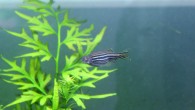
A group of biologists headed Prof Taifo Mahmud of Oregon State University has discovered that zebrafish (Danio rerio) are able to synthesize a chemical...