News

Jun 9, 2015 by News Staff

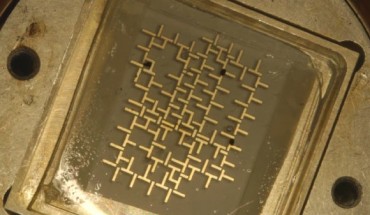
A group of bioengineers led by Dr Manu Prakash of Stanford University has developed a synchronous computer that operates using the physics of moving water droplets. Stanford University bioengineers have developed a computer that operates on water droplets. Image credit: Kurt Hickman. Because of its universal nature, the water-droplet computer can theoretically perform any operation that a conventional electronic computer can crunch, although at significantly...


Jun 9, 2015 by News Staff

More than 28,000 volunteers have helped scientists create a catalogue of more than 1.2 million camera trap images from Serengeti National Park, a UNESCO...

Jun 9, 2015 by News Staff

A new study published online in the journal PLoS ONE has found significant contamination of bumblebee pupae by the metal aluminum — a known neurotoxin...

Jun 9, 2015 by News Staff

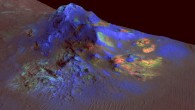
Glasses formed by asteroid impacts are an important target to search for signs of ancient life on Mars, but until now they have not been detected on the...

Jun 8, 2015 by News Staff

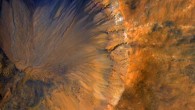
The High Resolution Imaging Science Experiment (HiRISE) camera aboard NASA’s Mars Reconnaissance Orbiter has captured an impressive picture of a fresh...

Jun 8, 2015 by News Staff

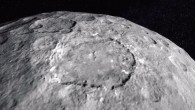
A new animated video by NASA’s Dawn mission scientists provides dramatic flyover views of the dwarf planet Ceres. The video is based on observations...

Jun 8, 2015 by News Staff

Astronomers using the Atacama Large Millimeter/submillimeter Array (ALMA) radio telescope in Chile have captured detailed images of the gravitationally...

Jun 8, 2015 by News Staff

According to a new study published in the journal Science Advances, a 9-meter-long three-horned dinosaur called the Triceratops developed teeth that could...

Jun 8, 2015 by News Staff

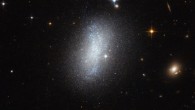
The Advanced Camera for Surveys on the NASA/ESA Hubble Space Telescope has taken an image of the dwarf irregular galaxy PGC 18431. This image shows the...

Jun 5, 2015 by News Staff

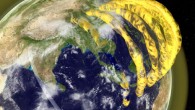
Scientists using the Murchison Widefield Array in the Western Australian desert have confirmed the existence of tubular plasma structures between the plasmasphere...

Jun 5, 2015 by News Staff

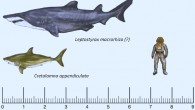
Three large vertebrae, believed to be that of an ancient, gigantic shark, have been discovered in Texas by members of the Paleontology Club of the University...

Jun 5, 2015 by News Staff

New observations with the Advanced Camera for Surveys on the NASA/ESA Hubble Space Telescope confirm that two Type Ia supernovae discovered six years ago...

Jun 5, 2015 by News Staff

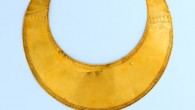
A group of archaeologists led by Dr Christopher Standish from the University of Bristol and the University of Southampton suggests people were trading...

Jun 5, 2015 by News Staff

Paleontologists at the Royal Tyrrell Museum of Palaeontology in Drumheller, Canada, have described a new genus and species of ceratopsid (horned dinosaur)...

Jun 4, 2015 by News Staff

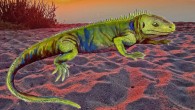
A group of paleontologists, led by Catherine Klein from the University of Bristol, UK, has put together the remains of a new small species of prehistoric...

Jun 4, 2015 by News Staff

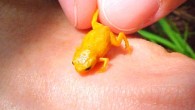
A group of scientists led by Prof Marcio Pie of the Universidade Federal do Paraná in Brazil has described seven new species of the frog genus Brachycephalus...

Jun 4, 2015 by News Staff

Many glacial lakes atop the Greenland Ice Sheet disappear completely within hours when large cracks form below them, draining the lakes and sending torrents...

Jun 4, 2015 by News Staff

A team of researchers led by Dr Roderick Davidson II of Vanderbilt University has created nano-spirals with unique optical properties that would be almost...

Jun 4, 2015 by News Staff

The well-preserved fossil of a previously unknown toothed bird that lived during the Cretaceous period, some 115 million years ago, has been found in the...

Jun 3, 2015 by News Staff

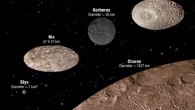
A team of astronomers using observations from the NASA/ESA Hubble Space Telescope has found that two of Pluto’s small moons, Nix and Hydra, are not neatly...