News

Dec 14, 2015 by News Staff

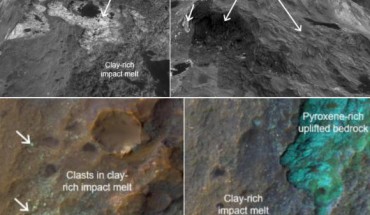
Clay deposits in impact craters on Mars have often been assumed to have been formed in the earliest Martian epoch – the Noachian period – over 3.7 billion years ago. New research published in the Journal of Geophysical Research: Planets finds clay minerals that appear to have formed after an impact event within the last 2 billion years. Ritchey Crater on Mars has impact melt deposits containing clay minerals. The clay minerals found within...
Dec 14, 2015 by News Staff

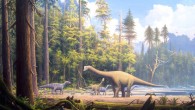
A group of researchers has found evidence of an abrupt, mid-latitude cooling of seawater during the Jurassic period, around 174 million years ago. University...

Dec 14, 2015 by Enrico de Lazaro

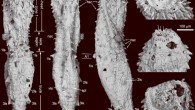
A team of paleontologists has discovered several early Cambrian (535 million years old) fossils of kinorhynch worms, including the new species Eokinorhynchus...

Dec 14, 2015 by Natali Anderson

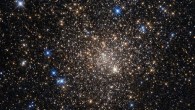
The NASA/ESA Hubble Space Telescope has captured a stunning image of the globular cluster Terzan 1. This image from Hubble’s Wide Field and Planetary...

Dec 11, 2015 by News Staff

Astronomers using NASA’s flagship space telescopes, Kepler and Spitzer, have discovered a raging, giant storm on a cool Jupiter-size star called W1906+40. The...

Dec 11, 2015 by Natali Anderson

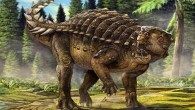
A new species of armored dinosaur has been identified from bones discovered more than two decades ago in Australia. An artist impression of Kunbarrasaurus...

Dec 11, 2015 by News Staff

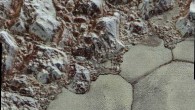
The newly-released enhanced color mosaic combines sharp pictures of Pluto from New Horizons’ Long Range Reconnaissance Imager (LORRI) taken 15 minutes...

Dec 10, 2015 by News Staff

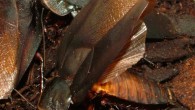
A new study led by Dr Sophie Mowles of Anglia Ruskin University shows how energetic courtship displays of male Cuban burrowing cockroaches attract female...

Dec 10, 2015 by Sergio Prostak

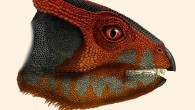
An international team of paleontologists has discovered a new species of hornless ceratopsian dinosaur, called Hualianceratops wucaiwanensis, in China. Life...

Dec 10, 2015 by Enrico de Lazaro

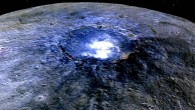
In two new studies, published today in the journal Nature, the dwarf planet Ceres reveals some of its most eye-catching secrets. In the first study, researchers...

Dec 10, 2015 by News Staff

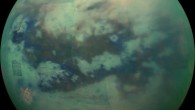
NASA’s Cassini robotic orbiter captured this view of Titan during a moderately close flyby on November 13, 2015. This composite image shows an infrared...

Dec 9, 2015 by Natali Anderson

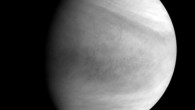
JAXA’s Akatsuki spacecraft successfully entered Venus’ orbit on Monday, December 7, where it now will prepare to study the planet’s atmosphere. This...

Dec 9, 2015 by Natali Anderson

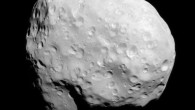
New images from NASA’s Cassini spacecraft offer close-ups of three of Saturn’s tiny moons – Atlas, Epimetheus and Prometheus. Cassini captured...

Dec 9, 2015 by News Staff

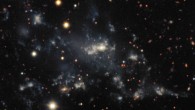
ESO’s Very Large Telescope (VLT) has made the first detailed observations of a rare dwarf galaxy recently formed within the giant collisional ring surrounding...

Dec 9, 2015 by Natali Anderson

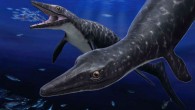
Paleontologists have discovered what they say is a completely unexpected new mosasaur that lived 72 million years ago in Japan. Life restoration of Phosphorosaurus...

Dec 8, 2015 by News Staff

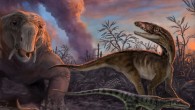
A multinational group of paleontologists has determined that the time elapsed between the emergence of early dinosauromorphs (dinosaur relatives) and the...

Dec 8, 2015 by News Staff

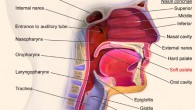
A team of scientists at Umeå University in Sweden has discovered a special group of muscle fibers in the soft palate of the human mouth. Upper respiratory...

Dec 8, 2015 by Sergio Prostak

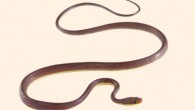
An international team of herpetologists, led by Dr R. Alexander Pyron of the George Washington University, has described a new species of fishing snake...

Dec 8, 2015 by News Staff

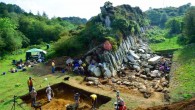
Enormous standing stones at Stonehenge are of sarsen, a local sandstone, but the smaller ones, known as bluestones, came from two prehistoric quarries...

Dec 7, 2015 by News Staff

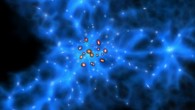
Astronomers using the Atacama Large Millimeter/submillimeter Array have discovered a cluster of monstrous young galaxies, called submillimeter galaxies,...