News

Dec 23, 2015 by Enrico de Lazaro

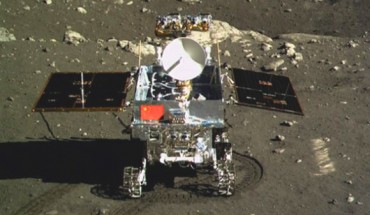
According to a team of scientists led by Dr Zongcheng Ling of Shandong University in Weihai, the Chinese lunar rover Yutu has found basalts unlike those returned by the American Apollo (1969-1972) and Soviet Luna (1970-1976) missions. The Chinese lunar rover Yutu, photographed by its lander Chang’e-3, after the lander touched down in Mare Imbrium. Image credit: CNAS / CLEP. “After some 40 years since the Apollo and Luna missions, China’s Chang’e-3...

Dec 22, 2015 by Natali Anderson

Marine biologists from the University of British Columbia were lucky to witness a New Holland seahorse (Hippocampus whitei) giving birth in the waters...

Dec 22, 2015 by News Staff

A group of scientists led by Imperial College London researcher Michael Johnson has identified two ‘gene networks’ associated with human cognitive...

Dec 22, 2015 by News Staff

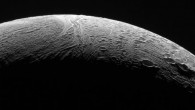
NASA’s Cassini robotic orbiter made a close flyby of Enceladus on December 19, the last targeted Enceladus encounter of the mission. This unprocessed...

Dec 22, 2015 by Natali Anderson

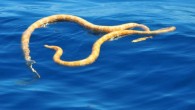
A team of scientists from James Cook University and Curtin University, both in Australia, has rediscovered two Australian endemic sea snake species, leaf-scaled...

Dec 21, 2015 by Enrico de Lazaro

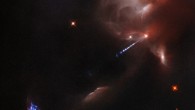
A pair of jets of very hot gas protrude outwards in perfect symmetry in this striking image of the Herbig-Haro (HH) object HH 24, taken by the NASA/ESA...

Dec 21, 2015 by News Staff

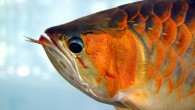
An international team of researchers from Malaysia and Australia has successfully sequenced the genome of a famous ornamental fish species called the Asian...

Dec 21, 2015 by Enrico de Lazaro

HH 34, a curious object in the constellation of Orion, is captured in this amazing image from NASA’s Hubble Space Telescope. This composite image shows...

Dec 20, 2015 by Enrico de Lazaro

NASA’s New Horizons spacecraft has beamed back the highest definition images of Nix yet. This panchromatic image of Pluto’s small moon Nix was taken...

Dec 18, 2015 by News Staff

An archaic species of the genus Homo from China, thought to be long extinct, likely survived until as recently as 14,000 years ago, a thigh bone found...

Dec 17, 2015 by Enrico de Lazaro

A new species of ornithopod dinosaur has been discovered in Spain dating back 125 million years to the Barremian stage of the Early Cretaceous epoch. Life...

Dec 17, 2015 by News Staff

A team of researchers from the United Kingdom has uncovered the first evidence of tool use by greater vasa parrots (Coracopsis vasa), unusual birs found...

Dec 17, 2015 by Natali Anderson

A team of astronomers has spotted three exoplanets orbiting around the same star – Wolf 1061 – one of which is in the habitable zone. This...

Dec 16, 2015 by News Staff

The Atacama Large Millimeter/submillimeter Array (ALMA) has found strong evidence that massive planets have recently formed around four very young stars,...

Dec 16, 2015 by Natali Anderson

A team of entomologists has captured Australian blue-banded bees’ unique approach to pollination – headbanging flowers up to 350 times a second. The...

Dec 16, 2015 by News Staff

Using NASA’s Fermi Space Telescope, the Very Energetic Radiation Imaging Telescope Array System (VERITAS) in Arizona, and other telescopes, astronomers...

Dec 15, 2015 by Sergio Prostak

A team of scientists from the United States, Argentina, and Brazil has described a new species of small treefrog from the rocky outcrops of the Brazilian...

Dec 15, 2015 by Natali Anderson

NASA’s Cassini spacecraft has snapped an amazing image of two of Saturn’s moons: Tethys and Enceladus. The Saturn moons Tethys (far) and Enceladus...

Dec 15, 2015 by Sergio Prostak

Australian little penguins are a separate species from those living in New Zealand, a team of ornithologists led by University of Otago scientist Dr Stefanie...

Dec 15, 2015 by Natali Anderson

A survey of so-called hot-Jupiters – giant exoplanets that orbit very close to their host stars – conducted with NASA’s Spitzer and the NASA/ESA...