News

Jan 5, 2017 by News Staff

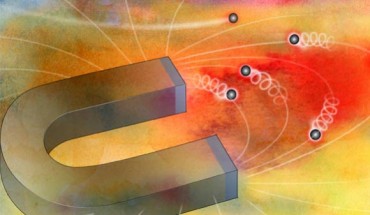
A team of materials scientists and physicists from the DOE’s Argonne National Laboratory, the National High Magnetic Field Laboratory and the National Institute of Standards and Technology has discovered a way to confine the behavior of electrons by using extremely high magnetic fields. The team’s results are published in the journal Nature Communications. Bhattacharya et al have discovered a way to confine the behavior of electrons by using extremely...


Jan 5, 2017 by News Staff

A large international team of astronomers has uncovered the cosmological source of a repeating ‘fast radio burst’ known as FRB 121102. The globally...

Jan 5, 2017 by News Staff

A team of researchers at the University of York, UK, has harnessed the therapeutic effects of carbon monoxide-releasing molecules to develop a new antibiotic...

Jan 4, 2017 by News Staff

CT scans of the fossilized skull of Dwykaselachus oosthuizeni — a shark-like fish that lived during the Permian period, around 280 million years...

Jan 4, 2017 by Enrico de Lazaro

This striking image, captured by ESO’s Visible and Infrared Survey Telescope for Astronomy (VISTA), shows the Orion A molecular cloud, the nearest known...

Jan 4, 2017 by News Staff

New experimental antibiotics developed by chemists at the University of Connecticut successfully treat methicillin-resistant Staphylococcus aureus (MRSA)...

Jan 3, 2017 by News Staff

A team of scientists at the University of California, San Francisco, has discovered a way to inactivate the CRISPR-Cas9 gene-editing system using newly...

Jan 3, 2017 by News Staff

Non-avian dinosaur eggs took a long time to hatch — between 3 and 6 months, according to new research on the teeth of fossilized dinosaur embryos. Herds...

Jan 3, 2017 by News Staff

A team of researchers in the UK is developing an interactive holographic video created from an MRI or CT scan that can display live footage of internal...

Jan 2, 2017 by News Staff

Australian manuka honey is at least as powerful against bacteria as the more commonly known New Zealand variety, according to a new study published in...

Jan 2, 2017 by News Staff

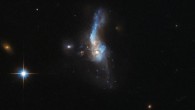
The NASA/ESA Hubble Space Telescope has taken a picture of LEDA 52270, a combination of two gas-rich spiral galaxies. This image, taken with the Advanced...

Jan 1, 2017 by News Staff

An international team of researchers from Spain and the UK has found that the protein TLR2 (Toll-like receptor 2) — a critical detector of the microbiota...

Dec 30, 2016 by News Staff

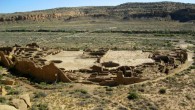
According to a new study published in the Journal of Archaeological Science: Reports, the ancient inhabitants of Chaco Canyon likely had to import corn...

Dec 30, 2016 by News Staff

Astronomers using NASA’s Wide-Field Infrared Survey Explorer (WISE) have discovered two celestial objects traveling through our neighborhood: 2016 WF9...

Dec 29, 2016 by News Staff

A new study by astronomers at the University of Illinois at Urbana-Champaign, published in the journal Physical Review Letters, links the unexplained changes...

Dec 29, 2016 by News Staff

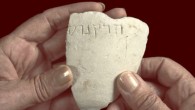
Archaeologists digging at a site in the City of David, in the Jerusalem Walls National Park, have found a fragment of a rare ancient bowl. The fragment...

Dec 29, 2016 by News Staff

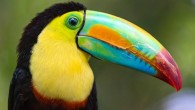
A new study published in the journal PLoS ONE suggests that there are 18,043 bird species in the world — nearly twice as many as previously thought. Toucan....

Dec 28, 2016 by News Staff

According to new research published in the journal Scientific Reports, the secret to reliably diagnosing concussions lies in the brain’s ability to process...

Dec 28, 2016 by News Staff

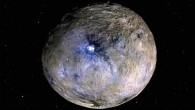
Images from NASA’s Dawn probe have revealed a dark, cratered world whose brightest area is made of reflective salts — not water ice. But several...

Dec 28, 2016 by Natali Anderson

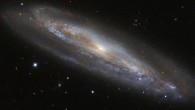
This image snapped by ESO’s New Technology Telescope (NTT), a 3.58-m telescope at the La Silla Observatory in Chile, shows the edge-on spiral galaxy...