News

Jan 28, 2017 by Enrico de Lazaro

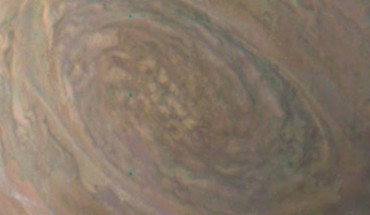
NASA’s Juno spacecraft has spotted a huge anticyclonic storm in Jupiter’s high north temperate latitudes. Juno snapped this shot of Jupiter’s northern latitudes on Dec. 11, 2016, as the orbiter performed a close flyby of the gas giant. The spacecraft was at an altitude of 10,300 miles (16,600 km) above Jupiter’s cloud tops. The image was processed by citizen astronomers Gerald Eichstaedt and John Rogers. Image credit: NASA / JPL-Caltech /...
Jan 27, 2017 by Natali Anderson

A research team led by Western Illinois University scientist Thomas Hegna has announced the discovery of two pyritized, egg-bearing specimens of the Ordovician...

Jan 27, 2017 by News Staff

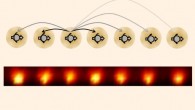
Thanks to a breakthrough by a research team led by University of California Berkeley physicist Norman Yao, time crystals are now a reality. Following a...

Jan 27, 2017 by News Staff

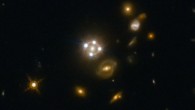
Astronomers from the international H0LiCOW (H0 Lenses in COSMOGRAIL’s Wellspring) collaboration have made a new measurement of the Hubble constant —...

Jan 26, 2017 by News Staff

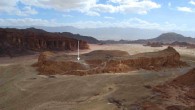
A team of Tel Aviv University archaeologists has uncovered a gatehouse and associated livestock pens — dating to the reign of Kings Solomon and David...

Jan 26, 2017 by News Staff

An international team of researchers led by National Radio Astronomy Observatory and University of Virginia astrophysicist Sabrina Stierwalt has spotted...

Jan 26, 2017 by News Staff

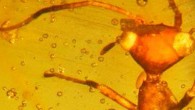
In a paper published in the journal Cretaceous Research, Oregon State University researchers described a never-before-seen insect species found in a piece...

Jan 26, 2017 by Enrico de Lazaro

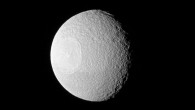
NASA’s Cassini spacecraft has sent back a breathtaking image of Tethys, a small, icy moon of Saturn. Cassini’s narrow-angle camera took this image...

Jan 25, 2017 by News Staff

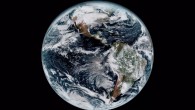
NOAA’s GOES-16 (formerly known as GOES-R), the first spacecraft in a new series of NASA-built advanced geostationary weather satellites, has sent the...

Jan 25, 2017 by News Staff

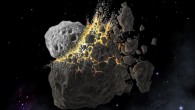
A new study published in the journal Nature Astronomy is the first to look at meteorites from before giant space collision 466 million years ago. This...

Jan 25, 2017 by News Staff

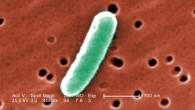
Researchers from the United States, China and France have created what they say is the world’s first stable semi-synthetic microorganism. The research...

Jan 25, 2017 by News Staff

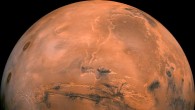
Methane present in the early Martian atmosphere, together with carbon dioxide and hydrogen may have created a greenhouse effect on the planet 3.5-4.5 billion...

Jan 24, 2017 by News Staff

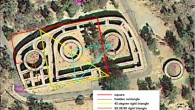
Arizona State University Professor Sherry Towers has examined the Sun Temple archaeological site at Mesa Verde National Park, Colorado, and found evidence...

Jan 24, 2017 by News Staff

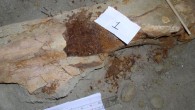
A team of paleontologists led by North Carolina State University researchers has isolated collagen peptides from the fossilized femur of Brachylophosaurus...

Jan 23, 2017 by News Staff

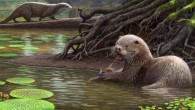
An international team of paleontologists has identified a new species of giant otter that lived in what is now China during the latest Miocene, approximately...

Jan 23, 2017 by News Staff

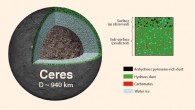
New observations from NASA’s Stratospheric Observatory for Infrared Astronomy (SOFIA) show that Ceres does not appear to have the carbon-rich surface...

Jan 23, 2017 by News Staff

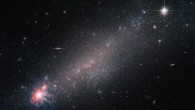
The NASA/ESA Hubble Space Telescope has produced this beautiful image of the cometary dwarf galaxy NGC 4861. This Hubble image shows the cometary dwarf...

Jan 23, 2017 by News Staff

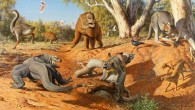
New evidence indicates the primary cause of megafaunal extinction in Australia 45,000 years ago was likely a result of humans, not climate change. A paper...

Jan 22, 2017 by News Staff

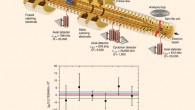
An international team of physicists led by RIKEN researcher Stefan Ulmer has found that the magnetic moment of the antiproton is extremely close to that...

Jan 20, 2017 by Enrico de Lazaro

A research team led by San Francisco State University astronomer Stephen Kane has obtained new observations of Wolf 1061, known to host at least three...