News

Apr 18, 2017 by News Staff

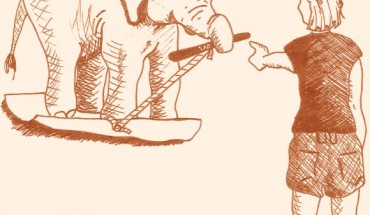
According to new research, Asian elephants (Elephas maximus) are able to recognize their own bodies as obstacles to success in problem-solving, further strengthening evidence of their intelligence. Once standing on the mat, elephants were instructed to pick up the stick and give it to the experimenter. Image credit: E. Gilchrist. “Elephants are well regarded as one of the most intelligent animals on the planet, but we still need more empirical,...
Apr 18, 2017 by News Staff

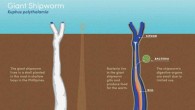
An international team of marine biologists, led by researchers at Northeastern University and the University of Utah, is the first to investigate a never...

Apr 18, 2017 by News Staff

An international team of astronomers and astrophysicists, led by University of Utah, has detected supermassive black holes in two ultra-compact dwarf galaxies:...

Apr 18, 2017 by News Staff

An international team of physicists from the United States, Japan, and China has created a fluid with negative mass, which is exactly what it sounds like....

Apr 18, 2017 by Enrico de Lazaro

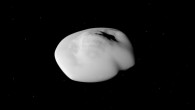
NASA’s Cassini spacecraft captured these images of Atlas, an inner satellite of Saturn, during a close flyby on April 12, 2017. These are the closest...

Apr 17, 2017 by News Staff

A study by Dr. Siegfried Eggl of NASA’s Jet Propulsion Laboratory and Dr. Max Popp of Princeton University and the Max Planck Institute of Meteorology...

Apr 17, 2017 by News Staff

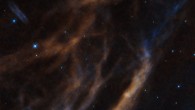
A new image taken recently by the NASA/ESA Hubble Space Telescope captured a faint and wispy shell of gas in the constellation of Canis Major. This Hubble...

Apr 14, 2017 by News Staff

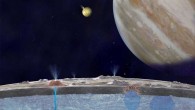
Recent observations of Europa by the NASA/ESA Hubble Space Telescope have uncovered a plume of material erupting from the moon’s surface at precisely...

Apr 14, 2017 by News Staff

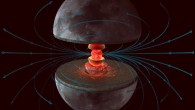
Crystallization of Moon’s liquid metallic core may have driven its now-lost magnetic field approximately 3 billion years ago, according to new research...

Apr 14, 2017 by News Staff

New research led by University College London, UK, shows that on average we are worse at spotting objects in crowded environments when they are above or...

Apr 13, 2017 by News Staff

During NASA’s Cassini spacecraft’s deepest-ever dive through Enceladus’ plume of gas and ice grains, researchers discovered molecular hydrogen in...

Apr 13, 2017 by News Staff

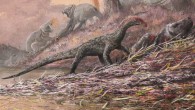
Paleontologists have long wondered what the earliest dinosaur relatives looked like. Most assumed that they would look like dwarf dinosaurs and walk on...

Apr 13, 2017 by News Staff

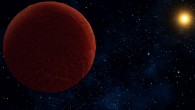
Researchers using Atacama Large Millimeter/submillimeter Array (ALMA) have uncovered new clues about the recently-discovered planetary body UZ224. The...

Apr 12, 2017 by News Staff

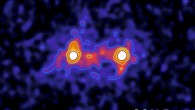
A duo of scientists at the University of Waterloo, Canada, has been able to capture the first composite image of a dark matter bridge that connects galaxies...

Apr 12, 2017 by News Staff

An international team of researchers, led by University of Leicester planetary astronomer Tom Stallard, has detected a localized region of cooling —...

Apr 12, 2017 by News Staff

Gray hair has been linked with an increased risk of coronary artery disease in men, in a study presented this month at EuroPrevent 2017 in Malaga, Spain. According...

Apr 11, 2017 by News Staff

Researchers from Austria and the United States have identified a group of giant viruses — Klosneuviruses — that harbor components of many other...

Apr 11, 2017 by News Staff

NASA’s Mars Atmosphere and Volatile EvolutioN (MAVEN) mission has made the first detection of the continuous presence of iron, magnesium, and sodium...

Apr 11, 2017 by News Staff

An international team of scientists led by the Rockefeller University has discovered that a variant of the human gene CRY1 (cryptochrome circadian clock...

Apr 10, 2017 by News Staff

Planetary researchers have long thought that the dwarf planet Ceres may have a temporary, thin atmosphere (an exosphere), but mysteries lingered about...