News

May 3, 2017 by James Romero

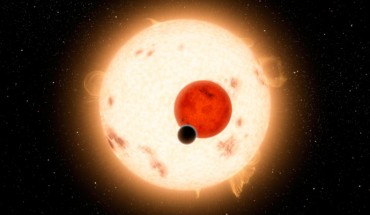
Exomoons around migrant hot Jupiters could hold onto life-giving atmospheres and maintain surface oceans for billions and billions of years. This is the conclusion of a paper from the University of Washington modeling the impact of inward migrating gas giants on their frozen moons. According Lehmer et al, moons around migrant hot Jupiters could hold onto atmospheres for billions of years. Image credit: NASA / JPL-Caltech. Exomoons are of increasing...


May 2, 2017 by News Staff

A wave spanning 200,000 light-years (about twice the size of our Milky Way Galaxy) is rolling through the Perseus Cluster, according to observations from...

May 2, 2017 by News Staff

In a study published recently in the journal PLOS Biology, neuroscientists identified three gut bacteria species — Acetobacter pomorum, Lactobacillus...

May 2, 2017 by News Staff

A multi-institutional team of researchers from China and the United States has sequenced the genome of the cultivated tea tree (Camellia sinensis). A tea...

May 2, 2017 by News Staff

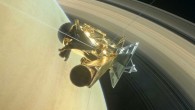
On April 26, 2017, NASA’s Cassini orbiter made its first ‘Grand Finale’ dive through the previously unexplored gap between Saturn and its rings....

May 1, 2017 by News Staff

An international team of researchers from the United States and Italy has identified new genetic variants associated with extreme survival and reduced...

May 1, 2017 by News Staff

Genetic material from 161 modern breeds helped a team of researchers at the National Human Genome Research Institute (NHGRI) of the National Institutes...

May 1, 2017 by News Staff

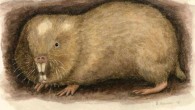
Scientists working in Tanzania have discovered and named two new species of the mole-rat genus Fukomys. The research was published in the journal PeerJ. The...

May 1, 2017 by Sergio Prostak

The NASA/ESA Hubble Space Telescope has captured this stunning image of the spiral galaxy NGC 5917. This image snapped by Hubble’s WFC3 camera shows...

Apr 28, 2017 by News Staff

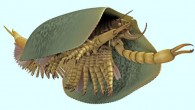
Paleontologists have uncovered a fossil species — named Tokummia katalepsis — that sheds light on the origin of Mandibulata (mandibulates),...

Apr 28, 2017 by News Staff

New research led by the Max Planck Institute for Evolutionary Anthropology (MPI-EVA) shows that Pleistocene cave sediments represent a rich source of ancient...

Apr 28, 2017 by Natali Anderson

Using a planet-hunting technique called gravitational microlensing, astronomers have detected an Earth-mass planet orbiting an ultracool dwarf 12,750 light-years...

Apr 27, 2017 by News Staff

On Wednesday, April 26, 2017, NASA’s Cassini spacecraft successfully made its first dive through the narrow gap between the giant planet Saturn and its...

Apr 27, 2017 by News Staff

In two separate studies, researchers have demonstrated that both the structure of the brain and several memory functions are linked to immune-related genes. The...

Apr 27, 2017 by News Staff

Researchers digging at the Cerutti Mastodon site, an archaeological site from the early late Pleistocene epoch near San Diego, California, found animal...

Apr 27, 2017 by News Staff

The International Barley Genome Sequencing Consortium, which is led by Dr. Nils Stein of the Leibniz Institute of Plant Genetics and Crop Plant Research,...

Apr 26, 2017 by Enrico de Lazaro

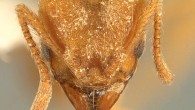
Three new species of the ant genus Sericomyrmex have been discovered in Brazil, Venezuela, Colombia, Ecuador and Peru. Sericomyrmex radioheadi, worker....

Apr 26, 2017 by News Staff

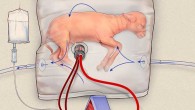
A unique womb-like environment designed by pediatric researchers at Children’s Hospital of Philadelphia — which is in an experimental stage using...

Apr 26, 2017 by News Staff

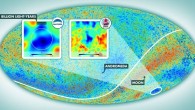
According to the results of a redshift survey of nearly 7,000 galaxies, a gigantic ‘hole’ in the Universe is unlikely to explain a ‘Cold Spot’...

Apr 26, 2017 by News Staff

Researchers using data from the Framingham Heart Study (FHS), a joint project of the National Heart, Lung and Blood Institute and Boston University, have...