News

Oct 17, 2017 by News Staff

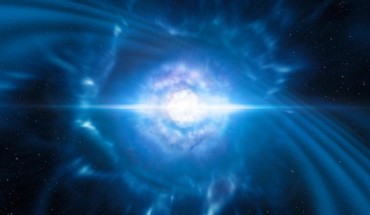
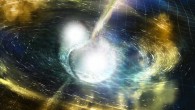
For the first time, astronomers have observed the source of gravitational waves, created by the merger of two neutron stars. The cataclysmic aftermaths of this kind of merger — long-predicted events called kilonovae — eject heavy elements such as gold and platinum into space. This discovery also provides the strongest evidence yet that short-duration gamma-ray bursts are caused by mergers of neutron stars. This artist’s impression shows...
Oct 17, 2017 by News Staff

The LIGO Scientific Collaboration, Virgo Collaboration, and their partners have directly detected gravitational waves — ripples in space and time...

Oct 16, 2017 by News Staff

Chalmers University of Technology Professor Erik Kristiansson and co-authors have identified over 70 new metallo-β-lactamase genes that make bacteria...

Oct 16, 2017 by News Staff

Archaeologists digging in the City of David, the Old City of Jerusalem, have found dozens of ancient clay seals, also known as bullae. A bulla of ‘Achiav...

Oct 16, 2017 by News Staff

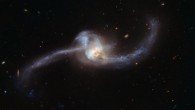
A jaw-dropping new image from the NASA/ESA Hubble Space Telescope captures what appears to be a strange galaxy with two ‘tails,’ but is actually the...

Oct 16, 2017 by News Staff

A team of researchers led by Case Western Reserve University School of Medicine has discovered a conserved molecular pathway that controls lifespan and...

Oct 16, 2017 by Sergio Prostak

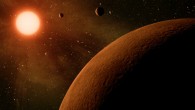
Astronomers using data from the NASA Kepler spacecraft’s reborn K2 mission have discovered a planetary system containing at least three exoplanets, orbiting...

Oct 15, 2017 by News Staff

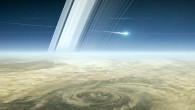
Analysis of science data from Cassini’s final plunge is ongoing, but NASA researchers already have a clear understanding of how the spacecraft behaved...

Oct 13, 2017 by News Staff

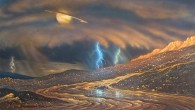
Saturn’s hazy moon has surprisingly extreme rainstorms, according to new research published in the journal Nature Geoscience. It’s raining on Titan....

Oct 13, 2017 by News Staff

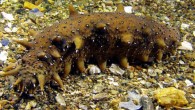
An international team of researchers from Canada and China has sequenced the genome of the economically important species Apostichopus japonicus, commonly...

Oct 13, 2017 by News Staff

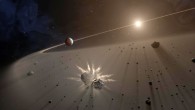
A research team led by Princeton University astrophysicists has discovered a co-moving pair of bright Sun-like stars, HD 240430 and HD 240429, with a significant...

Oct 13, 2017 by News Staff

A new study of ancient DNA appears to rule out the likelihood that inhabitants of Easter Island intermixed with Native South Americans prior to the arrival...

Oct 13, 2017 by Natali Anderson

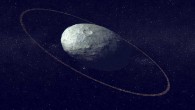
An international research team led by astronomers from the Institute of Astrophysics of Andalusia (IAA-CSIC) in Spain has discovered a ring around Haumea,...

Oct 12, 2017 by Enrico de Lazaro

Europeans and European/African Americans with a variant of the DNA Methyltransferase 3 Beta (DNMT3B) gene have an increased risk of developing nicotine...

Oct 12, 2017 by News Staff

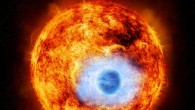
A new study in the Astronomical Journal finds that giant exoplanets with long-period orbits are more likely to be found around young stars that have a...

Oct 12, 2017 by News Staff

A team of researchers from Switzerland and the Netherlands has rediscovered and deciphered a 95-foot (29 m) long Luwian inscription found in the late 19th...

Oct 12, 2017 by News Staff

A space telescope placed far beyond the orbit of the dwarf planet Pluto could one day deliver high-resolution images of distant exoplanets, according to...

Oct 12, 2017 by Natali Anderson

An international team of paleontologists from the United States, Australia and Tanzania has discovered a new species of hyaenodont that lived 25 million...

Oct 11, 2017 by News Staff

In a nearby dwarf galaxy called the Small Magellanic Cloud, astronomers have discovered possibly the most luminous nova ever. SMCN 2016-10a was discovered...

Oct 11, 2017 by News Staff

An ornamented bâton percé, or pierced rod, unearthed at the archaeological site of Gołębiewo in Poland, may provide evidence of interregional contact...