News

Oct 27, 2017 by News Staff

The aboriginal inhabitants of the Canary Islands, commonly known as Guanches, were genetically most similar to modern North African Berbers, according to an ancient-DNA sequencing study published this week in the journal Current Biology. Guanches. Image credit: Gran Enciclopedia Virtual de las Islas Canarias. When and how the Guanches arrived to the Canary Islands have remained poorly understood, not least since they lacked boats and the knowledge...

Oct 27, 2017 by News Staff

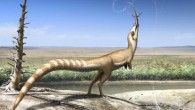
University of Bristol paleontologists and natural history artist Robert Nicholls have revealed how Sinosauropteryx prima — a small theropod dinosaur...

Oct 27, 2017 by News Staff

A team of professional and amateur astronomers using data from NASA’s Kepler mission has spotted the dusty tails of six exocomets orbiting KIC 3542116,...

Oct 26, 2017 by Enrico de Lazaro

New research has shed light on the collisional history of one of the most famous asteroids. Itokawa’s curious, varied terrain and lack of impact craters...

Oct 26, 2017 by News Staff

Galaxy clusters are among the most massive structures in the Universe. Every galaxy cluster contains a galaxy that is brighter than the other members,...

Oct 26, 2017 by News Staff

Massive, exceptionally well-preserved cladoxylopsid tree trunks found in Xinjiang, China, have revealed an interconnected web of woody strands (xylem)...

Oct 26, 2017 by News Staff

Footprints of a previously unknown, very large carnivorous dinosaur have been found on an ancient land surface — known as a palaeosurface —...

Oct 26, 2017 by News Staff

In a new study published in the journal eLife, Dr. Andrew Cowburn of the University of Cambridge and co-authors show that skin helps regulate blood pressure...

Oct 25, 2017 by News Staff

One of the largest and most detailed images of the Fornax Cluster ever created has been released by the European Southern Observatory (ESO). Countless...

Oct 25, 2017 by Enrico de Lazaro

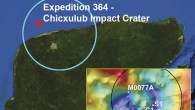
The Chicxulub crater is the only well-preserved peak-ring crater on Earth and linked to the Cretaceous-Tertiary mass extinction, an event 65 million years...

Oct 25, 2017 by James Romero

Weathered organic material once dissolved in Enceladus’ subsurface ocean is coating Saturn’s inner moons, explaining surprising variations in their...

Oct 25, 2017 by News Staff

According to a study led by Dr. Javier Lazaro of the Max Planck Institute for Ornithology, the skulls of Eurasian shrews (Sorex araneus) shrink in anticipation...

Oct 24, 2017 by News Staff

Zeta Puppis, also known as Naos, is a blue supergiant star, one of the most luminous stars in our Milky Way Galaxy. It is about 60 times more massive than...

Oct 24, 2017 by News Staff

According to a new study published in the Philosophical Transactions of the Royal Society B, ancient peoples began to systemically affect the evolution...

Oct 24, 2017 by News Staff

An older adult male Neanderthal from the Late Pleistocene, who had suffered multiple injuries, became deaf and must have relied on social support from...

Oct 24, 2017 by News Staff

Researchers involved in the E. coli long-term evolution experiment (LTEE) have debunked an established evolutionary theory with a study that provides a...

Oct 24, 2017 by Natali Anderson

A new species of manakin, called Machaeropterus eckelberryi, has been discovered in the foothills of southwestern Loreto and northern San Martín departments,...

Oct 23, 2017 by Enrico de Lazaro

On September 1, 2017, NASA’s Juno spacecraft witnessed a remarkable cosmic event — a small Jovian moon called Amalthea blocked the sunlight and...

Oct 23, 2017 by News Staff

Organic-rich materials found on Ceres by NASA’s Dawn orbiter are native to the dwarf planet, according to new research led by Southwest Research Institute...

Oct 23, 2017 by News Staff

Excavations led by a University of Tübingen archaeologist at the site of a recently-discovered Bronze Age settlement in the Kurdistan region of Iraq have...