News

Jan 6, 2020 by News Staff

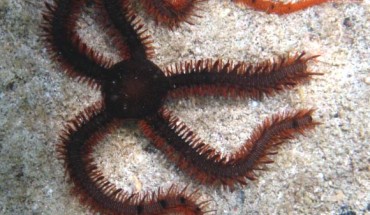
The red brittle star (Ophiocoma wendtii), a relative of starfish that inhabits coral reefs from Bermuda to Brazil, first captured scientific attention more than three decades ago thanks to its dramatic change in color between day and night and its strong aversion to light. In 2018, researchers demonstrated that the red brittle star is covered in thousands of light-sensitive cells, but the exact behaviors they control remained a mystery. A new study,...
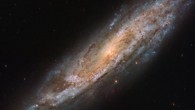

Jan 6, 2020 by Enrico de Lazaro

The NASA/ESA Hubble Space Telescope has captured an amazing photo of a spiral galaxy called NGC 2770. This Hubble image shows NGC 2770, a spiral galaxy...

Jan 3, 2020 by News Staff

A new study, published in the Mayo Clinic Proceedings, provides evidence of an association between cardiorespiratory fitness — which refers to the...

Jan 3, 2020 by News Staff

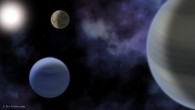
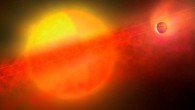
Sub-Neptunes — extrasolar planets with radii between 2.7 and 3 times that of Earth — are much more numerous than Neptune-sized and larger planets....

Jan 3, 2020 by Sergio Prostak

A Roman merchant ship and its amphorae cargo have been found lying at the bottom of Ionian Sea, the eastern Mediterranean, around 2,000 years after it...

Jan 3, 2020 by News Staff

Researchers from the Molecular Foundry at Lawrence Berkeley National Laboratory have found a way to convert nanoparticle-coated microscopic plastic beads...

Jan 3, 2020 by Enrico de Lazaro

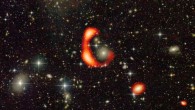
Astronomers using the Giant Metrewave Radio Telescope (GMRT) have discovered an extremely large off-centered ring of neutral hydrogen gas around AGC 203001,...

Jan 2, 2020 by News Staff

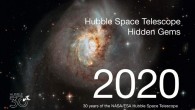
In September 2019, the Hubble team announced a social media initiative to celebrate three decades of success in discoveries with the NASA/ESA Hubble Space...

Jan 2, 2020 by News Staff

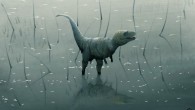
In the early 2000s, the fossilized skeletons of two small tyrannosaurs were collected from the famous Hell Creek Formation of Carter County, Montana. Nicknamed...

Jan 2, 2020 by News Staff

Common mealworms, the larvae of the darkling beetle (Tenebrio molitor), can consume toxic additives in polystyrene with no ill effects; the worms can then...

Jan 1, 2020 by News Staff

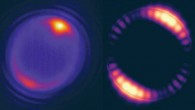
This impressive fireworks display, which involves a supermassive black hole, enormous shock waves and vast reservoirs of gas, is taking place in an intermediate...

Dec 31, 2019 by News Staff

The early Earth could have hosted many carbonate-rich lakes, which would have had high enough phosphorus concentrations to get life started, according...

Dec 31, 2019 by Enrico de Lazaro

Beta-carophyllene, a bicyclic sesquiterpene found in lavender, rosemary and ylang ylang, as well as various herbs and spices, has the capability to improve...

Dec 31, 2019 by Natali Anderson

Astronomers from the Dispersed Matter Planet Project (DMPP) have discovered three new planetary systems — designated DMPP-1, 2 and 3 — hosting...

Dec 30, 2019 by The Conversation

The existence of habitable alien worlds has been a mainstay of popular culture for more than a century. In the 19th century, astronomers believed that...

Dec 30, 2019 by News Staff

Lush green forests grew on Ellesmere and Axel Heiberg islands of the Canadian High Arctic 56 million years ago (Paleocene-Eocene boundary), according to...

Dec 30, 2019 by Enrico de Lazaro

Epigallocatechin gallate (EGCG), one of the principle polyphenolic compounds found in the leaves of the green tea plant (Camellia sinensis), is effective...

Dec 30, 2019 by Enrico de Lazaro

The NASA/ESA Hubble Space Telescope has snapped a beautiful photo of a barred spiral galaxy called NGC 4455. This Hubble image shows NGC 4455, a barred...

Dec 30, 2019 by Enrico de Lazaro

A team of Japanese scientists has discovered a 3-million-year-old petit-spot submarine volcano in one of the oldest parts of the Pacific Plate. The newfound...

Dec 27, 2019 by The Conversation

Nicolas Bourbaki is likely the last mathematician to master nearly all aspects of the field. A consummate collaborator, he made fundamental contributions...