News

Jan 8, 2026 by News Staff

New observations of the young cluster SPT2349-56 with the Atacama Large Millimeter/submillimeter Array (ALMA) have revealed unexpectedly scorching intracluster gas just 1.4 billion years after the Big Bang, challenging current models of galaxy cluster evolution. An artist’s impression of the forming galaxy cluster SPT2349-56: radio jets from active galaxies embedded in a hot intracluster atmosphere (red), illustrating a large thermal reservoir of...
Jan 8, 2026 by Enrico de Lazaro

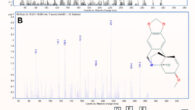
Archaeologists have identified traces of two toxic plant alkaloids — buphandrine and epibuphanisine — on artifacts from Umhlatuzana Rock Shelter...

Jan 7, 2026 by News Staff

A new analysis of stress, tides and interior forces suggests Jupiter’s icy moon Europa lacks the active seafloor faulting needed for robust hydrothermal...

Jan 7, 2026 by Enrico de Lazaro

The hominin fossils discovered in the Grotte à Hominidés at Thomas Quarry I in Casablanca, Morocco, are providing new evidence about the deep origins...

Jan 7, 2026 by News Staff

Scientists at the University of Waterloo and Kyushu University have developed the first method to create redundant, encrypted copies of qubits —...

Jan 6, 2026 by Sergio Prostak

The Voynich manuscript — often called the most mysterious manuscript in the world — has eluded attempts to understand its origin, nature, and...

Jan 6, 2026 by Enrico de Lazaro

Astronomers using the NASA/ESA Hubble Space Telescope have confirmed the existence of starless, hydrogen-rich objects dominated by dark matter. Named Reionization-Limited...

Jan 5, 2026 by Natali Anderson

Deep in the seasonally flooded savannas of Bolivia, a small, olive-green songbird has been quietly eluding science. Now, after six decades of confusion...

Jan 5, 2026 by Sergio Prostak

For more than two decades, Sahelanthropus tchadensis — a very early (6.7 to 7.2 million years old) hominin species discovered in Chad in 2001 —...

Jan 5, 2026 by News Staff

A population of free-floating planets is known from gravitational microlensing surveys. None have a directly measured mass, owing to a degeneracy with...

Jan 5, 2026 by News Staff

Compared to other primates, humans have remarkably large brains relative to their body sizes. The resultant high demands for glucose may have been supported...

Jan 5, 2026 by Enrico de Lazaro

Astronomers have released the new results from the CAFFEINE survey, shedding new light on a long-standing mystery: what controls the efficiency of star...

Jan 2, 2026 by Enrico de Lazaro

A research team led by Max Planck Institute for Evolutionary Anthropology scientists has generated the high-quality genome assembly of a Denisovan using...

Jan 2, 2026 by News Staff

Astronomers discovered an enormous galaxy cluster called RM J130558.9+263048.4 on December 31, 2020; the date, combined with the bubble-like appearance...

Dec 30, 2025 by Natali Anderson

An international team of astronomers from Chile, Europe, the United States, Canada and New Zealand has captured the most detailed spectroscopic glimpse...

Dec 30, 2025 by Enrico de Lazaro

In a new paper published this month in the journal iScience, researchers from the University of Tübingen and elsewhere present a multidisciplinary analysis...

Dec 30, 2025 by News Staff

Alzheimer’s disease (AD) is traditionally considered irreversible. However, a team of scientists led by Case Western Reserve University, University Hospitals...

Dec 29, 2025 by Natali Anderson

Ornithologists have discovered a new species of tinamou living in the montane forests of the Serra do Divisor, western Amazonia, Brazil. An individual...

Dec 29, 2025 by News Staff

Archaeologists from the University of Tübingen and the LMU Munich have unearthed the ruins of an ancient pottery workshop at the early Iron Age Dinka...

Dec 29, 2025 by News Staff

A rare trio of merging galaxies called J121/1219+1035 hosts three actively feeding, radio-bright supermassive black holes, according to a team of U.S....