News

Feb 5, 2013 by Enrico de Lazaro

A new research led by Spanish scientists casts doubt on the widely accepted theory that the last Neanderthals persisted in southern Iberia, Spain, at the same time that modern humans advanced in the northern part of the Iberian Peninsula. “It is improbable that the last Neanderthals of central and southern Iberia would have persisted until such a late date, approximately 30,000 years ago, as we thought before the new dates appeared,”...
Feb 5, 2013 by Enrico de Lazaro

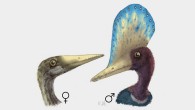
A team of scientists from Romania, the United Kingdom and Brazil has described a new species of extinct flying reptile from the time of the dinosaurs. This...

Feb 4, 2013 by Natali Anderson

Humans alone were responsible for the demise of the thylacine, an extinct predator also known as the Tasmanian tiger, according to a new study led by University...

Feb 4, 2013 by Sergio Prostak

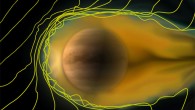
New observations of the second planet from the Sun made with ESA’s Venus Express spacecraft during a period of reduced solar wind pressure have provided...

Feb 1, 2013 by Natali Anderson

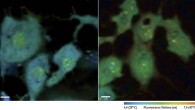
A team of scientists from Japan has found a way to take a close look at the temperature distribution inside living cells. In a previous study, Dr Okabe’s...

Feb 1, 2013 by Sergio Prostak

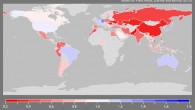
Using Google logs, an international team of scientists has found that in 2012 Germans searched for the future on the Internet more than any other nation. The...

Feb 1, 2013 by Enrico de Lazaro

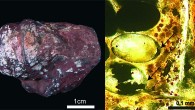
Tapeworm eggs found in 270-million-year-old fossilized shark feces provide the earliest known evidence of intestinal parasites in vertebrates. Left: a...

Feb 1, 2013 by Natali Anderson

A team of biologists at University of Alberta, Canada, has discovered that zebrafish’s stem cells can selectively regenerate damaged photoreceptor...

Jan 31, 2013 by Natali Anderson

Narrow ridges found in Martian impact craters in the Nilosyrtis highlands and the Nili Fossae region are the fossilized remnants of underground cracks...

Jan 31, 2013 by Sergio Prostak

According to a new study conducted by ichthyologists Dr Ralf Britz of the Natural History Museum and Dr David Johnson of the Smithsonian National Museum...

Jan 31, 2013 by Sergio Prostak

A gaseous compound called hydrogen sulfide may play a wide-ranging role in staving off aging, according to a team of scientists from University of South...

Jan 30, 2013 by Natali Anderson

Astronomers using ESA’s Herschel Space Observatory have captured two new views of the Andromeda Galaxy. This new image from the Herschel Space Observatory...

Jan 30, 2013 by Sergio Prostak

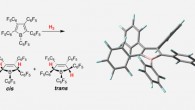
A team of chemists from Finland and Canada has been able to identify the mechanism that enables some non-metal compounds to mimic the reactivity of their...

Jan 30, 2013 by Sergio Prostak

Scientists at Brigham Young University say posts on Twitter could be helpful to health officials looking for a head start on flu outbreaks. In a study,...

Jan 29, 2013 by Sergio Prostak

Sexual selection can be inferred from the fossil record, according to a new paleontological study appearing in the journal Trends in Ecology and Evolution. Sexual...

Jan 29, 2013 by Sergio Prostak

According to a new study, conducted by Prof Nicolas Guéguen of the University of South Brittany, France, if you are serious about your flirting and hope...

Jan 29, 2013 by Natali Anderson

It has not been clear how salt halts the growth of the plant-root system, until now. According to an international study published in the journal Plant...

Jan 28, 2013 by Natali Anderson

A new study in owl monkeys (Aotus azarai) reveals that, when an owl monkey pair is severed by an intruding individual, the mate who takes up with a new...

Jan 28, 2013 by Sergio Prostak

An international team of astronomers using ESA’s XMM-Newton Space Observatory has identified a pulsar that is able to dramatically change the way...

Jan 25, 2013 by Natali Anderson

Dr Tina Šantl Temkiv and colleagues from Aarhus University, Denmark, have completed the first ever inventory of microbes and soil chemicals in a storm...