News

Oct 11, 2024 by News Staff

The newly-discovered isotope, plutonium-227, has a half-life of 0.78 seconds, according to a team of physicists from China. The region of the nuclear chart 87≤Z≤97 and 112≤N≤136 shows the new isotope plutonium-227 (red star) and the 12 nuclides (blue star) that were discovered at the Institute of Modern Physics at the Chinese Academy of Sciences. Image credit: Huabin Yang. “The magic numbers of protons and neutrons, such as 2, 8, 20, 28,...


Oct 11, 2024 by News Staff

Archaeologists excavating Tam Pà Ling (Cave of Monkeys) in northeastern Laos have recovered fossil evidence for some of the earliest Homo sapiens presence...

Oct 10, 2024 by Enrico de Lazaro

Paleontologists have identified a new genus and species of sauropod dinosaur from a semi-articulated specimen found in the 1990s in northern Wyoming, the...

Oct 10, 2024 by News Staff

In a new study, astronomers compared high-resolution images of Uranus from the NASA/ESA Hubble Space Telescope to the more-distant view from NASA’s New...

Oct 10, 2024 by News Staff

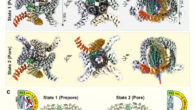
Viruses collected in a Northwestern University-led study are bacteriophages — a type of virus that infects and replicates inside of bacteria. The...

Oct 9, 2024 by News Staff

Paleontologists have described three new enantiornithine birds from the Cretaceous Hell Creek Formation, two of which represent new avisaurid species....

Oct 9, 2024 by News Staff

In a study led by the Sapienza University of Rome, caffeine intake was positively correlated with the percentage of circulating endothelial progenitor...

Oct 9, 2024 by News Staff

The island of Sicily is considered to be among the first occupied by humans in the European Upper Paleolithic. Studies to understand early occupation of...

Oct 9, 2024 by News Staff

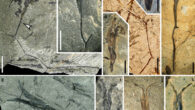
Named Alasemenia tria, the new specimen from the Wutong Formation in the Chinese province of Anhui dates back to the Famennian stage of the the Late Devonian...

Oct 9, 2024 by News Staff

Astronomers using the Zwicky Transient Facility (ZTF) have investigated the Taurid resonant swarm, a large interplanetary system that contains comet 2P/Encke,...

Oct 8, 2024 by Natali Anderson

A team of biologists in Israel has grown an extinct — or at least extirpated — tree species of the myrrh genus Commiphora from an ancient seed...

Oct 8, 2024 by News Staff

Carbonate minerals are of particular interest in paleoenvironmental research as they are an integral part of the carbon and water cycles, both of which...

Oct 8, 2024 by News Staff

A team of researchers at CSIRO has decoded the genome of the spotted handfish (Brachionichthys hirsutus), a critically endangered species of marine fish...

Oct 8, 2024 by News Staff

REBELS-25 existed as early as 700 million years after Big Bang, according to a paper published in the Monthly Notices of the Royal Astronomical Society. This...

Oct 8, 2024 by News Staff

The venom of black widow spiders contains a cocktail of seven specific latrotoxins, but only one — α-latrotoxin — targets vertebrates, including...

Oct 7, 2024 by Enrico de Lazaro

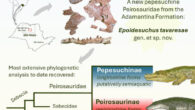
Paleontologists have described a new genus and species of long-snouted notosuchian from the fragmentary remains found in Brazil’s Adamantina Formation. Epoidesuchus...

Oct 7, 2024 by News Staff

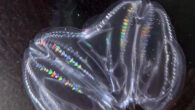
Two injured individuals of Mnemiopsis leidyi, a species of planktonic animals known as comb jellies or ctenophores, are capable of rapidly fusing into...

Oct 7, 2024 by News Staff

New research by paleontologists from the University of Leicester, the University of Birmingham and Liverpool John Moores University demonstrates an unexpectedly...

Oct 7, 2024 by News Staff

Geckos use the saccule — a part of their inner ear traditionally associated with maintaining balance and body positioning — to detect low-frequency...

Oct 7, 2024 by Enrico de Lazaro

Hubble’s Wide Field Camera 3 (WFC3) has taken a striking new image of the grand design spiral galaxy NGC 5248. This Hubble image shows NGC 5248, a grand...