News

Jul 29, 2013 by News Staff

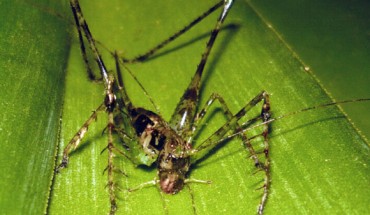
Arachnoscelis arachnoids, a rare species of katydid from Central Northeast of Colombia, uses elastic energy and wing movement to reach volumes greater than 110 decibels, which is louder than a diesel truck or a subway train. Female Arachnoscelis arachnoids (Benedict Chivers et al) Benedict Chivers from the University of Lincoln, UK, with colleagues found a region in Colombia where Arachnoscelis arachnoids (previously known from only one specimen)...


Jul 26, 2013 by News Staff

A new study published in the journal Current Biology provides the first scientific evidence that the lunar cycle can influence human sleep. New study shows...

Jul 26, 2013 by Natali Anderson

U.S. researchers believe they have answered a long-standing question about how electrons in the Earth’s Van Allen radiation belts can suddenly become...

Jul 26, 2013 by News Staff

Rapamycin – an immunosuppressant drug reported to extend the lives of mice by up to 14 per cent – has limited anti-aging effects, according...

Jul 26, 2013 by Enrico de Lazaro

A new study published online in the Journal of Human Evolution refutes a long body of evidence, suggesting that a 9-million-year-old ape called Oreopithecus...

Jul 26, 2013 by News Staff

Scientists from Japan and the United States have shown that they can plant false memories in the brains of genetically modified mice. The team identified...

Jul 25, 2013 by News Staff

Herpes simplex virus 1 has an internal pressure eight times higher than a car tire, and uses it to literally blast its DNA into human cells, according...

Jul 25, 2013 by News Staff

New research reported in the Zoological Journal of the Linnean Society shows that the previously known but misclassified small predatory fish Fouldenia...

Jul 25, 2013 by News Staff

Very detailed new observations with the Atacama Large Millimeter/submillimeter Array (ALMA) of nearby starburst galaxy NGC 253 may help explain the strange...

Jul 25, 2013 by News Staff

Superresolution single-molecule fluorescence microscopy has given researchers their clearest pictures yet of how white blood immune cells, known as natural...

Jul 25, 2013 by News Staff

Two tiny marsupial fossils from Australia are prompting an overhaul of theory about marsupial evolution after they revealed unexpected links to South America...

Jul 24, 2013 by News Staff

According to a new study published online in the Geophysical Research Letters, some water-carved Martian valleys appear to have been caused by runoff from...

Jul 24, 2013 by Sergio Prostak

Virologists led by Prof Jean-Michel Claverie and Dr Chantal Abergel from the Aix-Marseille Université’s Structural and Genomic Information Laboratory,...

Jul 24, 2013 by Natali Anderson

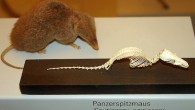
A large team of biologists from the United States, the Democratic Republic of Congo, Belgium and Germany, has reported the discovery of a new shrew species...

Jul 23, 2013 by News Staff

European scientists reporting in the journal Proceedings of the National Academy of Sciences have identified how unique neural pathways in the brain allows...

Jul 23, 2013 by News Staff

Bottlenose dolphins (Tursiops truncatus) can use copying of signature whistles as a way of addressing or labeling animals on an individual basis, according...

Jul 23, 2013 by News Staff

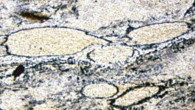
A new study, published in the journal Precambrian Research, describes evidence that primitive forms of life existed on land 2.2 billion years ago. Bright,...

Jul 22, 2013 by News Staff

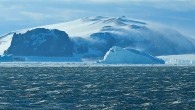
According to researchers reporting in the journal Nature Geoscience, global warmings between 5 – 3 million years ago may have caused parts of the...

Jul 22, 2013 by Natali Anderson

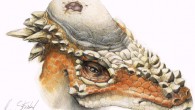
According to a study by scientists at the University of Wisconsin and Yale University, small, herbivorous, dome-headed dinosaurs from the late Cretaceous...

Jul 22, 2013 by Natali Anderson

Paleontologists have described a new extinct genus and species of sea turtle that lived in shallow seas about 67 million years ago during Late Cretaceous. Reconstruction...