News

Oct 1, 2013 by News Staff

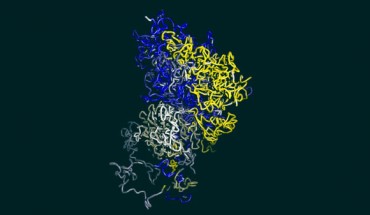
A team of scientists led by Dr Peter Fraser from the Babraham Institute in Cambridge, UK, has developed a new method to determine the 3D structures of chromosomes in single cells. This image shows a structural model of a chromosome from a white blood cell. Image credit: University of Cambridge. The commonly illustrated X-shape chromosome structure is only present when the cell divides. Dr Fraser and his colleagues have been able to model the structure...

Oct 1, 2013 by Enrico de Lazaro

An international team of scientists reporting in the Proceedings of the National Academy of Sciences has for the first time been able to get a complete...

Oct 1, 2013 by Bhuminder Singh

We would like to think that scientific efforts are free of trends and human whims and proceed in a straight line for the good of humanity; but this is...

Oct 1, 2013 by News Staff

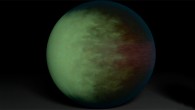
Astronomers using data from two space telescopes have created the first cloud map of a hot gas giant called Kepler-7b. This artist’s rendering shows...

Sep 30, 2013 by News Staff

Entomologists from Panama, Europe, Canada and Brazil have teamed up to describe in detail the different degrees of maternal instincts present within eight...

Sep 30, 2013 by News Staff

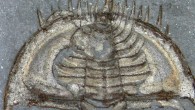
Olenellids – an early group of trilobites – were able to roll themselves up defensively, according to Dr Javier Ortega-Hernández from the...

Sep 30, 2013 by News Staff

A new study published in the journal Nature Geoscience explains how global atmospheric circulation creates a previously undetected layer of ozone above...

Sep 30, 2013 by News Staff

Men who have low levels of testosterone, a key male sex hormone that helps maintain sex drive, sperm production and bone health, may have a slightly elevated...

Sep 27, 2013 by News Staff

Astronomers using ArTeMiS, a new instrument installed on the Atacama Pathfinder Experiment – a 12-m diameter telescope in the Atacama Desert, have...

Sep 27, 2013 by News Staff

Fourteen-year-long archaeological excavations in the Parc National des Écrins in the southern Alps have provided evidence of human activity from the...

Sep 27, 2013 by Natali Anderson

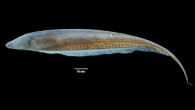
Biologists from Canada, the United States, Colombia and Guyana have described a new species and genus of electric knifefish from South America. Akawaio...

Sep 27, 2013 by News Staff

In five papers published today in the journal Science, scientists using the ChemCam, CheMin instruments, the Alpha Particle X-ray Spectrometer (APXS) and...

Sep 26, 2013 by Natali Anderson

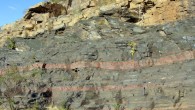
An analysis of three-billion-year-old soils from South Africa shows that oxygen appeared in the atmosphere more than 600 million years earlier than previously...

Sep 26, 2013 by Sergio Prostak

A team of paleontologists from China, the United States and Sweden has found a well-preserved fossil of ancient fish that lived in what is now China about...

Sep 26, 2013 by News Staff

Nineteen elements – including gold, arsenic, fluorine, cadmium, molybdenum and thorium – have been assigned new atomic weights, according to...

Sep 26, 2013 by News Staff

A team of astronomers led by Dr Alessandro Papitto from the Institute of Space Studies of Barcelona has discovered a fast-spinning pulsar that switches...

Sep 25, 2013 by News Staff

A new study, reported in the Journal of Archaeological Science, explores behavior of Aboriginal Australians during the Last Glacial Maximum (LGM for short). Aboriginal...

Sep 25, 2013 by Enrico de Lazaro

Archaeologists have unearthed remains of a theater at the archaeological site of the Roman town of Interamna Lirenas, founded in the late 4th century BC. Digging...

Sep 25, 2013 by News Staff

New, deep observations of the massive galaxy cluster Abell 1689 have revealed that it hosts the largest population of globular clusters ever found. This...

Sep 25, 2013 by Enrico de Lazaro

Two skull fossils unearthed in Germany provide the first direct evidence that lepidosaurs – reptiles closely related to lizards, snakes and tuatara...