News

Dec 6, 2013 by News Staff

In a new yeast study, researchers from Tel Aviv University and Columbia University have found that caffeine shortens and alcohol lengthens telomeres – the end points of chromosomal DNA, implicated in aging and cancer. Roasted coffee beans. Image credit: Mark Sweep. Telomeres, made of DNA and proteins, mark the ends of the strands of DNA in our chromosomes. They are essential to ensuring that the DNA strands are repaired and copied correctly....

Dec 6, 2013 by News Staff

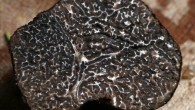
A team of scientists reporting in the Journal of Proteome Research has cracked the secret of the black Périgord truffle’s unique, pungent aroma. The...

Dec 6, 2013 by News Staff

A 1.34-million-year-old partial skeleton of the Plio-Pleistocene hominin Paranthropus boisei – including arm, hand, leg and foot fragments – found...

Dec 6, 2013 by News Staff

An international team of astronomers announced the discovery of a giant extrasolar planet orbiting its star at more than 20 times the average Neptune-Sun...

Dec 5, 2013 by News Staff

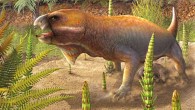
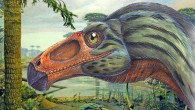
Paleontologists have discovered a new genus and species of dicynodont that lived in what is now modern Mozambique during the Late Permian period, about...

Dec 5, 2013 by News Staff

Scientists led by Dr David Fairlie from the University of Queensland, Australia, have found abnormal amounts of an inflammatory protein called PAR2 in...

Dec 5, 2013 by News Staff

A new study published in the journal Madagascar Conservation and Development has shown the ring-tailed lemurs (Lemur catta) are the world’s only...

Dec 5, 2013 by News Staff

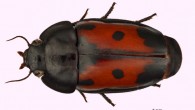
Dr Terry Erwin of the Smithsonian Institution has described a new genus and species of beetle from French Guiana. The Spectacular Guyane False-form beetle,...

Dec 5, 2013 by News Staff

Astronomers using NASA’s Chandra X-ray Observatory have reported the discovery of the youngest X-ray binary ever found in our Milky Way Galaxy. This...

Dec 4, 2013 by News Staff

Researchers from the Max Planck Institute for Evolutionary Anthropology in Leipzig, Germany, have sequenced the mitochondrial genome of a 400,000-year-old...

Dec 4, 2013 by News Staff

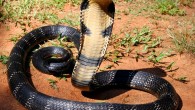
An international team of researchers has sequenced and analyzed the genome of the king cobra (Ophiophagus hannah). The team has also sequenced the genome...

Dec 4, 2013 by News Staff

Two teams of scientists using the Wide Field Camera 3 aboard NASA’s Hubble Space Telescope have detected faint signatures of water in the atmospheres...

Dec 3, 2013 by News Staff

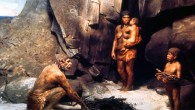
According to an international group of anthropologists and archaeologists led by Dr Brigitte Holt from the University of Massachusetts, Neanderthals (Homo...

Dec 3, 2013 by News Staff

By using CT scanning technology combined with computer simulations, paleontologists have revealed what role keratinous beaks of some dinosaurs played in...

Dec 3, 2013 by News Staff

An international team of biologists led by Dr Benjamin D. Charlton from the University of Sussex has discovered that koalas (Phascolarctos cinereus) possess...

Dec 2, 2013 by News Staff

By combining photographic and digital data from the US Naval Observatory-B and Sloan Digital Sky Survey DR9 catalogues, astronomers have made one of the...

Dec 2, 2013 by News Staff

British researchers, reporting in the journal Time & Mind: the Journal of Archaeology, Consciousness and Culture, may have cracked the mystery of why...

Dec 2, 2013 by Sergio Prostak

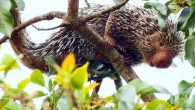
Brazilian biologists from the Federal University of Paraíba have discovered a new species of porcupine in the genus Coendou. The Baturite porcupine, Coendou...

Nov 29, 2013 by Enrico de Lazaro

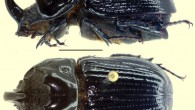
Entomologists from Bolivia and Brazil have described a new species of rhinoceros beetle from a subhumid forest in the Southern Bolivian Andes. Oryctophileurus...

Nov 29, 2013 by News Staff

Zircons – one of the most commonly used geochronometers – found within the Martian meteorite NWA 7533 have enabled an international team of scientists...