News

Feb 5, 2014 by News Staff

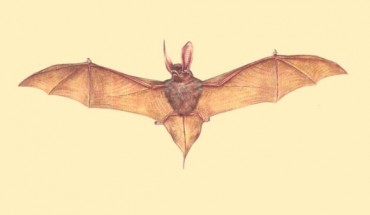
Paleontologists have described a new extinct genus and two fossil species of the bat family Myzopodidae from several fossilized jawbones and teeth discovered in the Sahara desert, northern Egypt. This is an artist’s impression of a sucker-footed bat. Today, Myzopodidae consists of two extant species – the Madagascar sucker-footed bat (Myzopoda aurita) and the Western sucker-footed bat (Myzopoda schliemanni). In contrast to almost all other...

Feb 5, 2014 by News Staff

Using very precise ground-based observations with ESO’s New Technology Telescope (NTT), an international team of planetary scientists has found that...

Feb 4, 2014 by Sergio Prostak

An international team of researchers has unearthed a 4,600-year-old small step pyramid at the archaeological site of al-Ghonemiya near the modern town...

Feb 4, 2014 by News Staff

Marine biologists from the University of Costa Rica and the Smithsonian Tropical Research Institute have discovered a new coral species at a depth of about...

Feb 3, 2014 by News Staff

According to scientists from the University of Glasgow’s Institute of Neuroscience and Psychology, there are only four basic emotions that we all experience. On...

Feb 3, 2014 by News Staff

A previously unknown painting by Raffaello Sanzio da Urbino, an Italian painter and architect better known as Raphael, has been identified by Granada University...

Feb 3, 2014 by News Staff

For the first time ever, physicists have created and photographed synthetic magnetic monopoles by engineering an environment that mimics a monopole’s...

Feb 3, 2014 by News Staff

In summer 2010, European marine biologists discovered conspicuous and mysterious ring formations in shallow waters off the Island of Møn in Denmark. Suggestions...

Jan 31, 2014 by News Staff

Researchers reporting in the Astrophysical Journal Letters have found that the majority of circumbinary planets – planets that orbit two stars –...

Jan 31, 2014 by News Staff

A new study published in the journal PLoS ONE has uncovered about 400 years of intensive land use around the ancient city of Mahendraparvata, Cambodia. Buddhist...

Jan 31, 2014 by Sergio Prostak

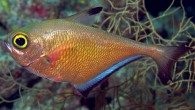
A multinational group of biologists has described a new species of sweeper from the waters of the Indian Ocean. Pempheris flavicycla marisrubri, Ras Mohammed,...

Jan 31, 2014 by News Staff

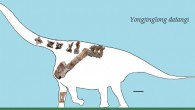
Paleontologists from the United States and China have described a new large plant-eating dinosaur that lived in what is now northwestern China during the...

Jan 30, 2014 by News Staff

In two new studies, genetic researchers have shown that about 20 percent of the Neanderthal genome survives in modern humans of non-African ancestry and...

Jan 30, 2014 by News Staff

New research explains how a bizarre species of snake scientifically called Chrysopelea paradisi can glide as much as 30 meters from trees. The Paradise...

Jan 30, 2014 by Natali Anderson

An anomalous magma chamber has been observed at 8–11 km depth beneath the upper east rift zone of one of the world’s most active volcanoes –...

Jan 30, 2014 by News Staff

Planetary scientists from Massachusetts Institute of Technology and European Space Astronomy have created a map of more than 100,000 asteroids throughout...

Jan 29, 2014 by News Staff

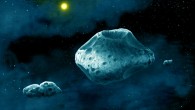
European scientists using ESO’s Very Large Telescope (VLT) have learned what the weather is like on the surface of one of the objects in a binary...

Jan 29, 2014 by News Staff

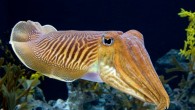
A study led by Leila Deravi of Harvard University has provided new details on the adaptive camouflage of a peculiar marine animal called cuttlefish. The...

Jan 29, 2014 by News Staff

A living cold-water coral reef has been discovered by chance in the waters off southern Greenland. This image, taken at a depth of about 900 meters, shows...

Jan 29, 2014 by News Staff

The acrobatic courtship displays of male Golden-collared manakins (Manacus vitellinus) are less energetically costly than they appear, says a group of...