News

Apr 3, 2014 by News Staff

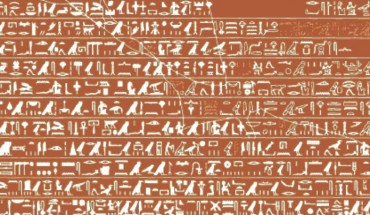
A new translation of a 40-line inscription on a 3,500-year-old stone block from Egypt called the Tempest Stela describes rain, darkness and the ‘sky being in storm without cessation, louder than the cries of the masses.’ The Tempest Stela of Ahmose. Reconstruction of the face. Image credit: Malcolm H. Wiener and James P. Allen, 1998. The Tempest Stela dates back to the reign of the pharaoh Ahmose, the first pharaoh of the 18th Dynasty. His rule...

Apr 3, 2014 by News Staff

Scientists say they have made a surprising discovery – a fossil bone of an extinct turtle species scientifically known as Atlantochelys mortoni. In...

Apr 3, 2014 by News Staff

An international group of astronomers using the MPG/ESO 2.2-m telescope at ESO’s La Silla Observatory, Chile, has captured a new image of two galaxies:...

Apr 2, 2014 by News Staff

Dr Shannon Still, a biologist with Chicago Botanic Garden, has described two new species of desert poppies from the deserts of California and Arizona. Eschscholzia...

Apr 2, 2014 by News Staff

According to a team of researchers led by Prof Tim Caro from the University of California at Davis, zebra’s stripes stave off biting flies, including...

Apr 1, 2014 by News Staff

Scientists led by Dr Felipe Braga-Ribas from Observatório Nacional/MCTI in Rio de Janeiro, Brazil, have observed for the first time a minor planet with...

Mar 28, 2014 by News Staff

Researchers led by Dr Jef Boeke of NYU Langone Medical Center’s Institute for Systems Genetics have synthesized the first functional chromosome in...

Mar 27, 2014 by News Staff

Astronomers Dr Chadwick Trujillo of Gemini Observatory in Hawaii and Dr Scott Sheppard of Carnegie Institution for Science have discovered a dwarf planet,...

Mar 25, 2014 by News Staff

Astronomers using data from ESA’s Herschel Space Observatory have completed the largest-ever survey of cosmic dust, spanning 323 nearby galaxies located...

Mar 21, 2014 by News Staff

Astronomers using NASA’s Hubble Space Telescope have captured a stunning new image of the nebula NGC 2174, also known as the Monkey Head Nebula. This...

Mar 21, 2014 by News Staff

A 1,800-year-old private letter from the Egyptian recruit Aurelius Polion of legio II Adiutrix stationed in Pannonia Inferior (modern day Hungary) has...

Mar 21, 2014 by News Staff

Using images from NASA’s Spitzer Space Telescope, a group of astronomers has created a dramatic 360-degree portrait of our Galaxy. This is a fragment...

Mar 21, 2014 by Sergio Prostak

The stony meteorite D’Orbigny is the source of a newly discovered mineral, kuratite. Its name honors Dr Gero Kurat (1938-2009), a world-renowned meteorite...

Mar 21, 2014 by News Staff

A large multinational team of scientists led by Prof David Neale from the University of California Davis has sequenced the entire genome of the Loblolly...

Mar 20, 2014 by News Staff

Paleontologists led by Dr Maomin Wang from Capital Normal University in China say the newly discovered stick insect Cretophasmomima melanogramma may have...

Mar 19, 2014 by Enrico de Lazaro

U.S. paleontologists have discovered a new raptor dinosaur that lived in western North America during the Cretaceous period, about 66 million years ago. This...

Mar 18, 2014 by News Staff

British researchers have brought back to life 1,530-year-old moss recovered from Antarctic permafrost. Extensive regrowth of the 1,530-year-old moss Chorisodontium...

Mar 18, 2014 by Sukant Khurana

While political apathy to many pressing problems of India is glaring, one key area of national concern, generates some hope. Looking at the successive...

Mar 18, 2014 by News Staff

Scientists using the BICEP2 Radio Telescope at the South Pole announced they have found the first direct evidence that gravitational waves – disturbances...

Mar 17, 2014 by News Staff

The nearly complete skeleton of the Australopithecus prometheus named Little Foot discovered in the Sterkfontein caves in South Africa is the oldest complete...