News

May 16, 2014 by News Staff

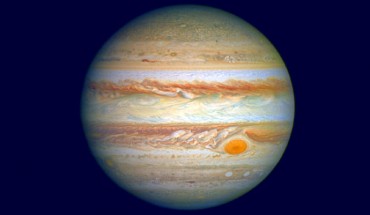
The Great Red Spot on Jupiter is shrinking, says a team of astronomers led by Dr Amy Simon of NASA’s Goddard Space Flight Center in Maryland. This full-disc image of Jupiter was taken on 21 April 2014 with Hubble’s Wide Field Camera 3. Image credit: NASA / ESA / A. Simon, Goddard Space Flight Center. Jupiter’s Great Red Spot is a high-pressure anticyclone. This monster storm shows up in images as a conspicuous deep red eye embedded...
May 16, 2014 by News Staff

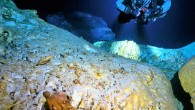
The well-preserved, genetically intact skeleton of a teenage girl who lived about 13,000-12,000 years ago in what is now Mexico is helping resolve a long-standing...

May 15, 2014 by Natali Anderson

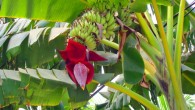
Botanists from the University of Calicut in Kerala, India, have described a new species in the genus Musa. Musa arunachalensis. Image credit: Sreejith...

May 14, 2014 by News Staff

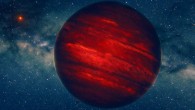
A newly discovered extrasolar planet takes about 80,000 years to make a complete orbit around its star, GU Psc. This composite image shows the exoplanet...

May 13, 2014 by News Staff

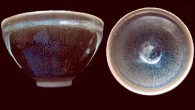
Sometimes, studying past technologies leads to remarkable discoveries that can help design better materials for the future. This is the little known science...

May 13, 2014 by Enrico de Lazaro

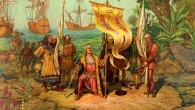
Underwater archaeologists led by the famed treasure hunter Barry Clifford believe they have discovered remains of the Santa Maria – the flagship of Christopher...

May 13, 2014 by News Staff

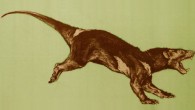
Paleontologists from the Case Western Reserve University have discovered a fossil of a kitten-sized predator that lived in what is now Bolivia during the...

May 12, 2014 by News Staff

Astronomers from the United States, Russia and Australia have discovered the first true solar sibling – HD 162826. HD 162826. Image credit: sky-map.org. HD...

May 12, 2014 by News Staff

An international team of botanists has described a new, nickel-hyperaccumulating species of plant from Luzon Island, Philippines. Rinorea niccolifera....

May 9, 2014 by News Staff

Australian researchers led by Dr Timothy Bredy of the University of Queensland’s Queensland Brain Institute say they may have found a way to silence...

May 9, 2014 by News Staff

Entomologists have discovered 24 new species of wasps that mummify caterpillars, several were named after famous people including Jimmy Fallon, John Stewart,...

May 9, 2014 by Enrico de Lazaro

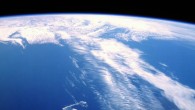
NASA’s High Definition Earth Viewing experiment (HDEV) is now live-streaming views of our planet from space captured by HD cameras. HDEV placed four...

May 9, 2014 by News Staff

Astronomers from the United States and China have discovered a hypervelocity star (HVS) that is the closest bright HVS and one of the three most massive...

May 8, 2014 by News Staff

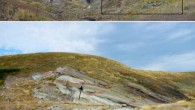
Scientists from Alberta Geological Survey and the University of Alberta have discovered an 8 km wide bowl-shaped impact crater near Bow City in southern...

May 8, 2014 by News Staff

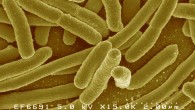
Scientists from at the Scripps Research Institute have created a living Escherichia coli that has a pair of ‘alien’ DNA building blocks in...

May 8, 2014 by News Staff

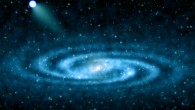
Astronomers led Dr Mark Vogelsberger of MIT/Harvard-Smithsonian Center for Astrophysics have created the first realistic virtual Universe using a computer...

May 8, 2014 by News Staff

Entomologists from Switzerland led by Dr Rainer Neumeyer have described a new species of the wasp genus Polistes from Central Europe. The Swiss paper wasp,...

May 7, 2014 by News Staff

Scientists from the Universidad de La República in Uruguay have described three new species of tarantulas from northern Argentina. The newly discovered...

May 7, 2014 by News Staff

Paleontologists led by Dr Phil Manning of the University of Manchester have used a highly sensitive synchrotron-imaging technique to reveal ancient injuries...

May 7, 2014 by News Staff

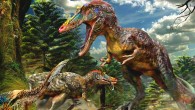
Paleontologists have discovered a new species of long-snouted tyrannosaur – scientifically named Qianzhousaurus sinensis and nicknamed Pinocchio...