News

Apr 6, 2015 by News Staff

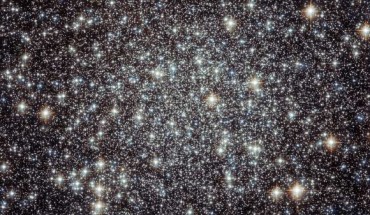
This newly released Hubble image shows Messier 22, the brightest globular cluster visible from the northern hemisphere. This is a close-up of the central region of the globular cluster Messier 22, as observed by the NASA/ESA Hubble Space Telescope. Image credit: ESA / Hubble / NASA. Messier 22 is located in the constellation Sagittarius, approximately 10,400 light-years away. It was the first globular cluster to be discovered. German astronomer Johann...

Apr 6, 2015 by News Staff

A new study, led by Dr Laura Crotty Alexander of the Veterans Affairs San Diego Healthcare System and the University of California San Diego, shows that...

Apr 4, 2015 by News Staff

In a new study reported in the journal Science, Princeton University physicists tested the frustrated magnets – so-named because they should be magnetic...

Apr 3, 2015 by News Staff

Some scientists have argued for decades that black holes are the ultimate vaults, entities that suck in information and then evaporate without leaving...

Apr 3, 2015 by News Staff

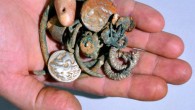
A team of amateur speleologists has found a small cache of rare coins, silver and bronze artifacts in a remote stalactite cave in northern Israel. The...

Apr 3, 2015 by News Staff

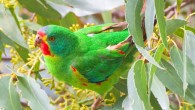
The critically endangered swift parrot (Lathamus discolor) could become extinct within less than two decades, says a new study published online in the...

Apr 3, 2015 by News Staff

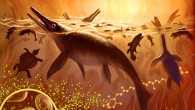
A mass extinction some 201 million years ago may have been triggered by changes in the biochemical balance of Panthalassa (also known as the Panthalassic...

Apr 3, 2015 by News Staff

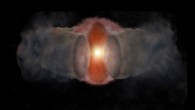
A multinational team of astronomers, led Dr Carlos Carrasco-Gonzalez of the National Autonomous University of Mexico, used the Karl G. Jansky Very Large...

Apr 2, 2015 by News Staff

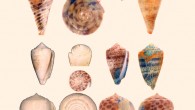
San Jose State University researcher Dr Jonathan Hendricks has used ultraviolet (UV) light to reveal and characterize the original shell coloration patterns...

Apr 2, 2015 by News Staff

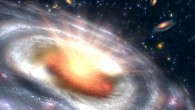
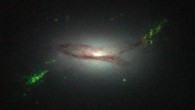
Astronomers using the Hubble Space Telescope have photographed eight unusual looped structures – ephemeral ‘ghosts’ of quasars that flickered...

Apr 2, 2015 by News Staff

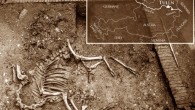
A group of archaeologists led by Dr Alfred Galik of the University of Veterinary Medicine Vienna has found a complete camel skeleton in a large refuse...

Apr 2, 2015 by News Staff

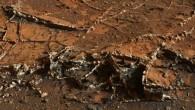
This March 18, 2015, view from the Mast Camera (Mastcam) on NASA’s Curiosity rover shows a network of two-tone mineral veins at an area called Garden...

Apr 2, 2015 by News Staff

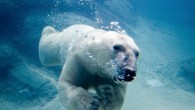
Polar bears (Ursus maritimus), increasingly forced on shore due to sea ice loss, may be eating land-based foods, but any nutritional gains are limited...

Apr 1, 2015 by News Staff

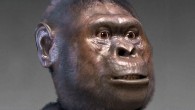
The new date places an almost complete skeleton of Australopithecus prometheus from the Sterkfontein cave in South Africa as an older relative of famous...

Apr 1, 2015 by News Staff

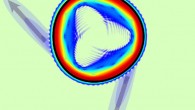
According to a group of scientists led by Dr Li Ge from the CUNY’s College of Staten Island, a pair of light waves may hold the key to creating the world’s...

Apr 1, 2015 by News Staff

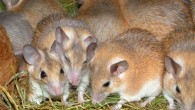
Male mice produce highly complex ultrasonic vocalizations (USVs) to seduce females, says a team of biologists led by Duke University Medical Center. Arabian...

Apr 1, 2015 by News Staff

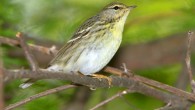
A team of ornithologists led by William DeLuca of the University of Massachusetts, Amherst, reports the first direct evidence that the blackpoll warbler...

Apr 1, 2015 by News Staff

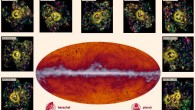
An international team of astronomers using data from two ESA’s space telescopes, Planck and Herschel, has identified more than 200 proto-clusters of...

Mar 31, 2015 by News Staff

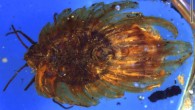
A team of scientists from China, Germany, Poland, and the United Kingdom, has described a new genus and species of an ensign scale insect from mid-Cretaceous...

Mar 31, 2015 by News Staff

An international group of physicists led by Prof Vladan Vuletic of MIT has developed a novel technique that can successfully entangle 3,000 atoms using...