News

May 3, 2016 by News Staff

Analyses of genome-wide data from 51 Eurasians from 7,000 – 45,000 years ago reveal two big changes in prehistoric human populations that are closely linked to the end of the last Ice Age, approximately 19,000 years ago, according to an international team of researchers led by Harvard Medical School scientist Dr. David Reich. Mousterian Homo neanderthalensis by Charles R. Knight. “Archeological studies have shown that anatomically modern Homo...

May 3, 2016 by News Staff

An international team of scientists has completely sequenced the mitochondrial genome of the Hispaniolan solenodon (a venomous, insectivorous mammal that...

May 2, 2016 by Natali Anderson

A team of astronomers led by Dr. Michaël Gillon from the University of Liège has discovered three Earth-sized exoplanets around a nearby ultracool dwarf...

May 2, 2016 by News Staff

The NASA/ESA Hubble Space Telescope has captured a striking new photo of a barred spiral galaxy called NGC 4394. This Hubble image shows NGC 4394, a barred...

Apr 29, 2016 by News Staff

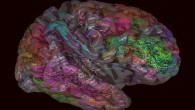
A team of neuroscientists and psychologists at the University of California, Berkeley, has created a detailed ‘semantic atlas’ showing which human...

Apr 29, 2016 by News Staff

Observations of a tailless comet called C/2014 S3 (PanSTARRS), made with ESO’s Very Large Telescope and the Canada France Hawaii Telescope, show that...

Apr 29, 2016 by Enrico de Lazaro

According to a team of scientists headed by Dr. Jean-Jacques Hublin at the Max Planck Institute for Evolutionary Anthropology in Leipzig, Germany, tooth-marks...

Apr 29, 2016 by News Staff

A new study led by Dr. Gilles Laurent from the Max Planck Institute for Brain Research in Frankfurt, Germany, reveals slow-wave (SW) and rapid eye movement...

Apr 28, 2016 by News Staff

A team of scientists led by Dr. Todd Thiele from the University of North Carolina at Chapel Hill has identified a circuit between two brain regions that...

Apr 28, 2016 by Enrico de Lazaro

A team of entomologists has described a new species of scorpion — Pseudouroctonus maidu — from the foothills of the Sierra Nevada in northeastern...

Apr 28, 2016 by News Staff

Ligeia Mare, one of the largest seas on Saturn’s moon Titan, consists of pure methane and likely has a seabed covered by a sludge of organic-rich material,...

Apr 27, 2016 by News Staff

On April 17, 2016, an active region on the Sun released an M6.7 class solar flare, captured here by NASA’s Solar Dynamics Observatory (SDO). Solar flares...

Apr 27, 2016 by News Staff

A team of scientists at the University of Montreal, Canada, has created a DNA-based nanothermometer that is 20,000 times smaller than a human hair. Scientists...

Apr 27, 2016 by Enrico de Lazaro

A remarkable new species of titanosaurian sauropod dinosaur being named Sarmientosaurus musacchioi has been discovered by a team of paleontologists led...

Apr 27, 2016 by News Staff

Using the NASA/ESA Hubble Space Telescope, astronomers have discovered a tiny, dark moon orbiting the dwarf planet Makemake, one of several dwarf planets...

Apr 26, 2016 by News Staff

The Martian surface — including the location of ESA’s Beagle-2 lander, and the ancient lakebeds discovered by NASA’s Curiosity rover —...

Apr 26, 2016 by News Staff

Using computational modeling and neutron scattering, physicists have discovered a novel state of water molecule. Physicists discovered that water in the...

Apr 26, 2016 by News Staff

An international team of scientists from New Zealand, Australia and the UK — including Prof. Colin Willoughby from the University of Liverpool —...

Apr 26, 2016 by News Staff

Marine scientists have found that biofluorescent catsharks, such as the swell shark from the eastern Pacific and the chain catshark from the western Atlantic,...

Apr 25, 2016 by Enrico de Lazaro

In a large-scale international study, researchers have identified three genetic variants associated with subjective well-being (happiness), two variants...