News

Jul 18, 2016 by News Staff

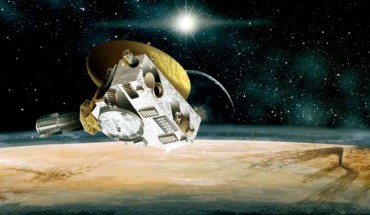
One year ago, NASA’s New Horizons space probe entered the history books by exploring the Pluto system. Image credit: NASA / Johns Hopkins University Applied Physics Laboratory / Southwest Research Institute. After a journey of 9.5 years through the Solar System, New Horizons made its closest approach to Pluto on July 14, 2015. Since then, the spacecraft has sent back spectacular images of the dwarf planet, its largest moon Charon and four smaller...

Jul 18, 2016 by News Staff

This image, taken with the Advanced Camera for Surveys (ACS) on board the NASA/ESA Hubble Space Telescope, shows the star-forming galaxy NGC 3125. This...

Jul 15, 2016 by News Staff

Archaeologists from the University of Cambridge have made remarkable discoveries about everyday life in the Bronze Age during the excavation of ancient...

Jul 15, 2016 by News Staff

Astronomers from the Baryon Oscillation Spectroscopic Survey (BOSS, part of the Sloan Digital Sky Survey III) have produced the largest-ever 3D map of...

Jul 15, 2016 by News Staff

Daily infusions with serotonin, a naturally-occurring chemical associated with feelings of happiness, were shown to increase calcium levels in both the...

Jul 14, 2016 by News Staff

In a new study published in the journal eLife, scientists apply big-data analysis to reveal the full extent of viruses’ impact on the evolution of humans...

Jul 14, 2016 by News Staff

Astronomers using the Atacama Large Millimeter/submillimeter Array (ALMA) telescope have taken the first-ever image of a water snow-line within a protoplanetary...

Jul 14, 2016 by Natali Anderson

A team of paleontologists has found fossil fragments from a remarkable new species of theropod dinosaur that walked our planet around 94 million years...

Jul 14, 2016 by Enrico de Lazaro

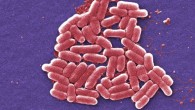
For the second time, a clinical strain of Escherichia coli with the colistin resistance gene mcr-1 has been detected in humans in the United States, according...

Sunflowers. Image credit: Betty Jo Tindle / CC BY-SA 3.0. The one fact about plants that most people probably remember from school is that they use sunlight...

Jul 13, 2016 by News Staff

An international team of researchers from the United States and Australia has made a successful vaccine formulation that targets pathological proteins...

Jul 13, 2016 by Natali Anderson

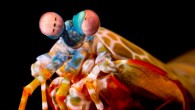
The eye-rolling behavior of mantis shrimp helps them see the world, says a team of biologists led by Nicholas Roberts of the University of Bristol, UK. Mantis...

Jul 13, 2016 by Enrico de Lazaro

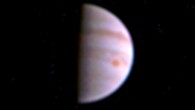
Juno’s low-resolution in-orbit images of Jupiter and three of its largest moons — Europa, Io, and Ganymede — have made their way back to...

Jul 12, 2016 by News Staff

Wild Brazilian bearded capuchin monkeys (Sapajus libidinosus) use stones to pound open defended food, including cashew nuts. And this activity dates back...

Jul 12, 2016 by News Staff

The latest images released by NASA’s HiRISE (High Resolution Imaging Science Experiment) team show ‘Morse code’ dunes on the Martian surface. ‘Morse...

Jul 12, 2016 by Enrico de Lazaro

Astronomers have discovered a new dwarf planet in the Kuiper Belt, a vast ring of icy debris that is encircling the outer rim of our Solar System just...

Jul 12, 2016 by News Staff

A group of astronomers has used the High Acuity Wide-field K-band Imager (HAWK-I), an infrared instrument installed on ESO’s Very Large Telescope (VLT)...

Jul 11, 2016 by Enrico de Lazaro

An international team of scientists, led by Dr. Niels Kjærgaard from the University of Otago in Dunedin, New Zealand, has used steerable ‘optical tweezers’...

Jul 11, 2016 by News Staff

Astronomers have succeeded in obtaining an infrared spectrum of the recently discovered brown dwarf WISE J085510.83-071442.5 (WISE 0855 for short), providing...

Jul 11, 2016 by News Staff

The subject of this Hubble image is LEDA 56779, a spiral galaxy located 300 million light-years away in the constellation of Hercules. This image from...