News

Sep 22, 2016 by News Staff

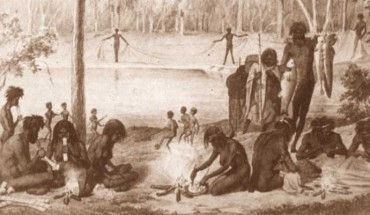
The first comprehensive genomic study of Indigenous Australians has revealed that they are indeed the direct descendants of Australia’s earliest settlers and diverged from their Papuan neighbors about 37,000 years ago. The study also confirmed that all modern non-African populations are descended from a single wave of migrants, who left Africa approximately 72,000 years ago. Depiction of the Jarijari (Nyeri Nyeri) people near Merbein engaged in...
Sep 21, 2016 by News Staff

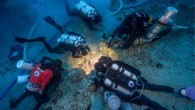
An international group of archaeologists led by the Woods Hole Oceanographic Institution and the Hellenic Ministry of Culture and Sports has discovered...

Sep 21, 2016 by Enrico de Lazaro

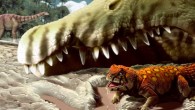
 A 90-million-year-old fossil discovered in Morocco is the oldest known iguanian lizard from Africa, which could help tell the story of lizard evolution...

Sep 21, 2016 by News Staff

This image shows the Lyman-alpha blob LAB-1. This picture is a composite of two different images taken with the FORS instrument on ESO’s Very Large Telescope...

Sep 20, 2016 by News Staff

According to a new study published today in the journal Circulation: Cardiovascular Genetics, smoking leaves historical ‘footprint’ on the human genome...

Sep 20, 2016 by News Staff

The first major study of visual pigment genes and lenses in snakes has found that the reptiles match their vision to their lifestyles. The Montpellier...

Sep 20, 2016 by News Staff

This Hubble image shows the barred spiral galaxy Messier 77; the streaks of red and blue in the image highlight pockets of star formation along the pinwheeling...

Sep 20, 2016 by News Staff

According to new research, American alligators (Alligator mississippiensis) have remained virtually untouched by evolutionary change for at least 8 million...

Sep 19, 2016 by Enrico de Lazaro

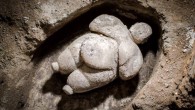
Archaeologists digging at the Neolithic site of Çatalhöyük in Central Anatolia, Turkey, have discovered an ancient female figurine, about 8,000 years...

Sep 19, 2016 by News Staff

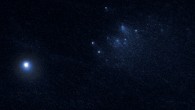
The NASA/ESA Hubble Space Telescope has captured one of the most detailed observations of a comet breaking apart. This image captured by Hubble’s Wide...

Sep 18, 2016 by News Staff

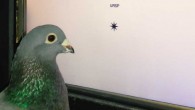
Pigeons (Columba livia) can learn to distinguish real words from non-words by visually processing their letter combinations, according to a surprising...

Sep 17, 2016 by News Staff

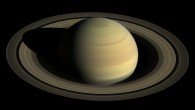
The latest images from NASA’s Cassini spacecraft show the northern hemisphere of Solar System’s second-largest planet, as that part of the gas giant...

Sep 16, 2016 by News Staff

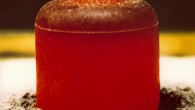
Plutonium, a heavy, silvery metal with 15 isotopes that is produced by the neutron irradiation of natural uranium, is formidably complex element that does...

Sep 16, 2016 by News Staff

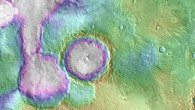
ESA’s Mars Express, NASA’s Mars Reconnaissance Orbiter and Mars Global Surveyor have sent back new images and data from the Red Planet that indicate...

Sep 16, 2016 by News Staff

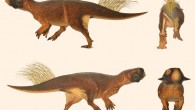
A University of Bristol-led international team of paleontologists has produced an accurate reconstruction of an exceptionally well-preserved specimen of...

Sep 15, 2016 by News Staff

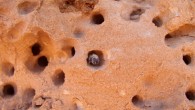
A team of entomologists led by Utah State University researcher Dr. Michael Orr has described an unusual new species of bee from the deserts of the southwestern...

Sep 15, 2016 by News Staff

A team of scientists led by Dr. Christian Rutz, a researcher at the Centre for Biological Diversity at the University of St Andrews, UK, has discovered...

Sep 15, 2016 by News Staff

Astronomers using ESO’s Very Large Telescope and NASA’s Chandra and Hubble space telescopes have solved the mystery of a rare change in the behavior...

Sep 15, 2016 by News Staff

Scientists on NASA’s New Horizons mission have learned that reddish material in the north polar region of Pluto’s biggest moon, Charon, is chemically...

Sep 15, 2016 by News Staff

On its way to assembling the most detailed 3D map ever made of our Galaxy, ESA’s Gaia spacecraft has pinned down the precise position on the sky and...