News

Nov 2, 2016 by James Romero

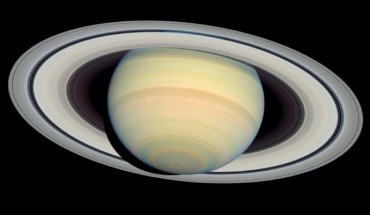
Saturn’s rings are billions of years younger than we thought, say Cornell University researchers analyzing an almost forgotten set of data, collected 10 years ago by NASA’s Cassini mission. This image is a view from the NASA/ESA Hubble Space Telescope taken on March 22, 2004. Camera exposures in four filters (blue, blue-green, green and red) were combined to form the Hubble image and render colors similar to what the eye would see through a telescope...
Nov 2, 2016 by News Staff

A team of researchers at the University of Virginia has devised a new imaging approach that combines powerful aspects of both magnetic resonance imaging...

Nov 2, 2016 by News Staff

Astronomers using ESO’s Very Large Telescope (VLT) have observed giant pillar-like structures within the Carina Nebula, a huge star-formation region...

Nov 1, 2016 by News Staff

Archaeologists with the Israel Antiquities Authority (IAA) have uncovered a papyrus fragment that includes the earliest reference to Jerusalem in an extra-Biblical...

Nov 1, 2016 by News Staff

Earth’s Moon is among the strangest planetary bodies in our Solar System. Its orbit lies unusually far away from our planet, with a surprisingly large...

Nov 1, 2016 by News Staff

A large genome-wide association study of more than 560,000 people has identified 10 new genetic regions associated with the number of children we have...

Oct 31, 2016 by News Staff

An international effort to find and catalogue the multitude of so-called near-Earth asteroids has reached a milestone: 15,000 discovered — with many...

Oct 31, 2016 by News Staff

Common swifts (Apus apus) remain airborne for 10 months of their non-breeding period, according to a new study by Lund University ornithologists. A common...

Oct 31, 2016 by News Staff

A Northwestern University-led team of researchers has identified a region in the brain responsible for the ‘placebo effect’ in pain relief, when a...

Oct 31, 2016 by News Staff

A stunning new image taken by the NASA/ESA Hubble Space Telescope reveals the ‘pulsing heart’ of one of the most beautiful and well-studied objects...

Oct 31, 2016 by Sergio Prostak

An international team of astronomers has discovered a giant extrasolar planet orbiting a young star called CVSO 30. Not only have the scientists detected...

Oct 29, 2016 by News Staff

Astronomers using observations from NASA’s Kepler and Swift space observatories have spotted 18 fast-spinning stars that produce X-rays at more than...

Oct 28, 2016 by News Staff

An international team of astrophysicists from France and the United States has determined that the surface properties of Proxima Centauri b — an...

Oct 28, 2016 by News Staff

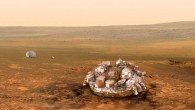
An image from the High Resolution Imaging Science Experiment (HiRISE) camera on NASA’s Mars Reconnaissance Orbiter (MRO) reveals further details of the...

Oct 28, 2016 by News Staff

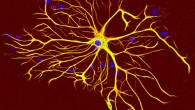
Glial cells – non-neuronal brain cells that provide structural, nutritional and other supports to the brain — play a critical role in controlling...

Oct 27, 2016 by News Staff

Long-flight astronauts have atrophy of the muscles supporting the spine — and they don’t return to normal even after several weeks back on Earth,...

Oct 27, 2016 by News Staff

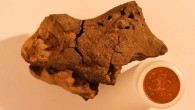
A strange brown pebble found near Bexhill in Sussex, UK, has been identified as the first known example of fossilized brain tissue from a dinosaur. Brain...

Oct 27, 2016 by News Staff

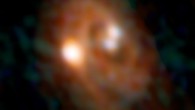
A triple protostar system surrounded by a disk with a spiral structure has been observed by astronomers using the Atacama Large Millimeter/submillimeter...

Oct 27, 2016 by Bhuminder Singh

Dr. Raj Kurupati and colleagues from the Wistar Institute, University of Pennsylvania, and Duke University Medical Center showed that an individual’s...

Oct 26, 2016 by News Staff

The Murchison Widefield Array (MWA), a low-frequency (80-300 MHz) radio telescope located at the Murchison Radio-astronomy Observatory in Western Australia,...