News

Aug 21, 2017 by News Staff

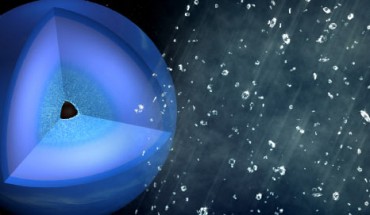
A new experiment at SLAC National Accelerator Laboratory reveals how large diamonds may be formed from just hydrogen and carbon in the deep interior of ice giant planets such as Neptune and Uranus. A cutaway depicts the interior of Neptune (left). In the new experiment, Kraus et al studied a plastic simulating compounds formed from methane — a molecule with just one carbon bound to four hydrogen atoms that causes the distinct blue cast of Neptune;...

Aug 21, 2017 by News Staff

Streptococcus agalactiae (Group B-Streptococcus, or GBS) is a type of bacteria that can cause invasive infections in people of all ages. A research team...

Aug 21, 2017 by Enrico de Lazaro

A relatively large near-Earth asteroid will safely fly by pur planet on September 1, 2017, according to NASA. (3122) Florence will pass safely by Earth...

Aug 21, 2017 by News Staff

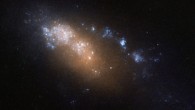
This image of the small galaxy NGC 178 comes courtesy of the NASA/ESA Hubble Space Telescope’s Wide Field Planetary Camera 2 (WFPC2). This new image...

Aug 18, 2017 by News Staff

A team of Israel Antiquities Authority (IAA) archaeologists and students has discovered an Assyrian-period water system near Rosh Ha-Ayin, a city in the...

Aug 18, 2017 by News Staff

Citrus fruits such as citrons and lemons were clear status symbols for the ancient Roman ruling elite, according to new research from Tel Aviv University. Still...

Aug 18, 2017 by Enrico de Lazaro

Fossils discovered in Turkey represent a new species that is a previously unknown relative of modern-day marsupials, according to a new paper published...

Aug 18, 2017 by Natali Anderson

An international team of researchers from the Kiepenheuer Institute for Solar Physics and the University of Texas at Arlington has spotted signs of an...

Aug 17, 2017 by Enrico de Lazaro

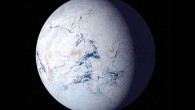
The rapid rise of marine planktonic algae 659-645 million years ago (Cryogenian period), between the Sturtian and Marinoan ‘snowball Earth’ glaciations,...

Aug 17, 2017 by News Staff

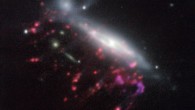
An international research team, led by Dr. Bianca Poggianti of the INAF-Astronomical Observatory of Padova, has used the MUSE instrument on ESO’s Very...

Aug 17, 2017 by News Staff

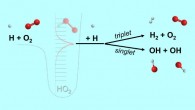
A duo of researchers from Columbia University and Argonne National Laboratory has discovered an entirely new class of chemical reaction, dubbed chemically...

Aug 17, 2017 by News Staff

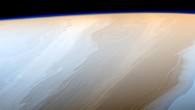
NASA’s Cassini mission has shared an amazing close-up portrait of Saturn taken from the Cassini robotic probe. This is a false color image of Saturn,...

Aug 17, 2017 by News Staff

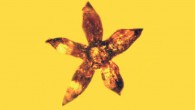
In a paper published recently in the journal Palaeodiversity, U.S. paleontologists described a new species of angiosperm flower, Tropidogyne pentaptera,...

Aug 16, 2017 by Enrico de Lazaro

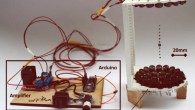
A research team at the University of Bristol, UK, has developed a relatively cheap and small acoustic levitator that is capable of holding samples of interest...

Aug 16, 2017 by News Staff

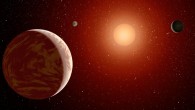
Dr. Rory Barnes, an assistant professor in the Department of Astronomy and Astrobiology Program at the University of Washington, arrived at this finding...

Aug 16, 2017 by News Staff

An international team of astronomers has found evidence for a unique gravitational lensing system, in which a massive star cluster is magnifying an extremely...

Aug 16, 2017 by Enrico de Lazaro

An international team of archaeologists led by the University of South Florida is the first to successfully excavate the 5,000 m2 Roman villa of Durrueli...

Aug 15, 2017 by News Staff

Chilesaurus diegosuarezi, a peculiar dinosaur that roamed the Earth some 145 million years ago and looked like a raptor but was in fact a plant-eater,...

Aug 15, 2017 by News Staff

Physicists from the ATLAS experiment, one of the four major experiments at CERN’s Large Hadron Collider (LHC) in Switzerland, have found the first direct...

Aug 15, 2017 by News Staff

A team of physicists at the University of Bonn in Germany has developed a technique to create optical ‘wells’ for a photonic Bose-Einstein condensate. The...