News

Sep 22, 2017 by News Staff

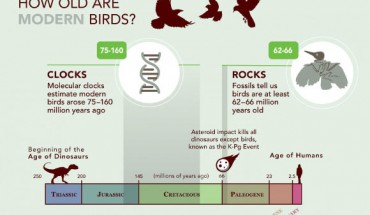
The Cretaceous-Tertiary mass extinction — an event 65 million years ago that wiped out the dinosaurs and was triggered by a massive asteroid that slammed into Earth — led to acceleration in the rate of genetic evolution among its avian survivors, and these survivors were much smaller than their pre-extinction relatives, according to a new study. This is the ‘Liliput Timeline.’ Image credit: Cornell Lab of Ornithology. “There is good...

Sep 21, 2017 by News Staff

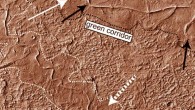
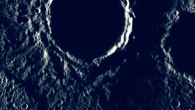
A new study led by Brown University planetary researchers adds three new large members to the list of water ice-filled craters near Mercury’s north pole...

Sep 21, 2017 by News Staff

Cassiopea jellyfish, a genus of true jellyfish found throughout the tropics in shallow ocean waters and mudflats, exhibit reversible behavioral quiescence...

Sep 21, 2017 by News Staff

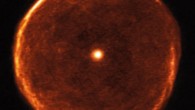
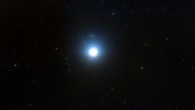
New observations from the Atacama Large Millimeter/submillimeter Array (ALMA) have revealed a remarkably thin spherical shell around U Antliae, a star...

Sep 21, 2017 by News Staff

A new study published in the journal Frontiers in Ecology and Evolution examines the relationship between agricultural potential and population on Easter...

Sep 21, 2017 by News Staff

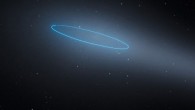
Astronomers using the NASA/ESA Hubble Space Telescope have spotted an unusual object in the asteroid belt between Mars and Jupiter: two asteroids orbiting...

Sep 20, 2017 by News Staff

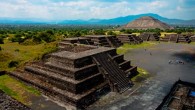
Arizona State University archaeologist Michael E. Smith has conducted a comparative analysis of Teotihuacan with earlier and later Mesoamerican urban centers...

Sep 20, 2017 by News Staff

According to a meta-analytic study published in the journal Neuropsychology Review, obsessive-compulsive disorder is not associated with a higher intelligence...

Sep 20, 2017 by News Staff

Exceptionally large individuals of Beelzebufo ampinga, an extinct species of frog that lived in Madagascar during the Late Cretaceous epoch, about 68 million...

Sep 20, 2017 by News Staff

A team of researchers at the Australian National University in Canberra, Australia, has produced the most comprehensive estimate yet of Earth’s composition...

Sep 19, 2017 by News Staff

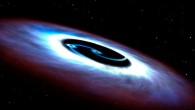
Astronomers have discovered what may be the most compact binary supermassive black hole ever known in a galaxy about 400 million light years from Earth. An...

Sep 19, 2017 by News Staff

An international team of researchers led by the Wellcome Trust Sanger Institute has analyzed genome-wide data of 381 individuals from 85 language groups...

Sep 19, 2017 by Enrico de Lazaro

River deposits exist across the Martian surface. A large sedimentary basin named Aeolis Dorsa contains some of the planet’s most spectacular and densely...

Sep 19, 2017 by News Staff

A research team led by Boston University scientists has identified a new type of lung cell that is implicated in the body’s immune defense against pneumonia-causing...

Sep 18, 2017 by News Staff

Nearly five decades after it was first predicted that rapidly rotating hot stars would emit polarized light, astronomers have succeeded in observing the...

Sep 18, 2017 by News Staff

Temnospondyls — a diverse group of extinct small-to-giant amphibians that flourished worldwide during the Carboniferous, Permian, and Triassic periods...

Sep 18, 2017 by News Staff

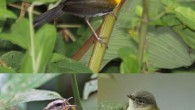
Two bird species that look the same, but have songs so different they can’t recognize each other, should be considered distinct species, according to...

Sep 18, 2017 by News Staff

NGC 6753 is a whirl of color in this remarkable image from the NASA/ESA Hubble Space Telescope — the bursts of blue throughout the spiral arms are...

Sep 18, 2017 by News Staff

The Bakhshali manuscript, an ancient Indian mathematical manuscript written on more than 70 leaves of birch bark, is notable for having a dot representing...

Sep 15, 2017 by News Staff

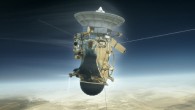
Today, NASA’s Cassini spacecraft made its final approach to Saturn and dove into the gas giant’s atmosphere. Loss of contact with the orbiter took...