News

Mar 18, 2025 by News Staff

For the last two decades, the prevailing view in human evolutionary genetics has been that Homo sapiens first appeared in Africa around 200,000 to 300,000 years ago, and descended from a single lineage. However, according to new research from the University of Cambridge, modern humans are a result of two populations (potentially Homo heidelbergensis and Homo erectus) that diverged 1.5 million years ago and came together in an admixture event 300,000...
Mar 18, 2025 by News Staff

Paleontologists from the Australian Museum Research Institute, the University of New South Wales, the University of Canberra and CSIRO have described a...

Mar 18, 2025 by News Staff

Astrophysicists from China and Australia have found that the birth masses of neutron stars can be described by a unimodal distribution that smoothly turns...

Mar 17, 2025 by Enrico de Lazaro

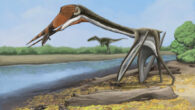
A new genus and species of azhdarchid pterosaur being named Infernodrakon hastacollis has been discovered by a team of paleontologists from Idaho State...

Mar 17, 2025 by Natali Anderson

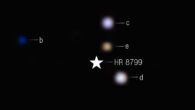
Astronomers using the Near-Infrared Camera (NIRCam) onboard the NASA/ESA/CSA James Webb Space Telescope have captured coronagraphic images of the HR 8799...

Mar 17, 2025 by Natali Anderson

Paleontologists have identified a new genus and species of obruchevodid petalodont (petal-toothed) shark from multiple teeth unearthed at Mammoth Cave...

Mar 17, 2025 by Enrico de Lazaro

Who the first inhabitants of Western Europe were, what their physical characteristics were, and when and where they lived are some of the pending questions...

Mar 17, 2025 by Enrico de Lazaro

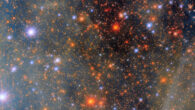
A new image taken with the NASA/ESA Hubble Space Telescope shows a small region of the Small Magellanic Cloud, one of the closest galaxies to the Milky...

Mar 14, 2025 by Natali Anderson

A cryptic new species of the honeyeater genus Myzomela has been described by an international team of ornithologists from Malaysia, India, the United Kingdom...

Mar 14, 2025 by News Staff

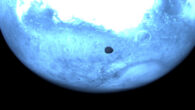
On March 12, 2025, Hera — ESA’s first Space Safety mission — came to within 5,000 km of the surface of Mars and 1,000 km of Deimos. While...

Mar 13, 2025 by News Staff

A team of astronomers from Taiwan, Canada, the United States, and France has observed 128 additional moons orbiting the gas giant Saturn, bringing its...

Mar 13, 2025 by News Staff

Pelage coloration, which serves numerous functions, is crucial to the evolution of behavior, physiology, and habitat preferences of mammals. However, little...

Mar 13, 2025 by News Staff

According to new research from Keele University and the Universidad de Alicante, near-Earth explosions of giant O- and B-type stars occur at a rate of...

Mar 12, 2025 by News Staff

Searching for land refugia becomes imperative for human survival during the hypothetical sixth mass extinction. Studying past comparable crises can offer...

Mar 12, 2025 by News Staff

Astrophysicists have found that a recently-discovered transient radio source, ILT J110160.52+552119.62, whose roughly minute-long pulses arrive with a...

Mar 12, 2025 by Natali Anderson

Paleontologists have studied and described three previously unknown dinosaur track-bearing surfaces from a locality near Biloela in Queensland, Australia. Dinosaur...

Mar 12, 2025 by News Staff

Organometallic molecules consist of a metal ion surrounded by a carbon-based framework. They are relatively common for early actinide elements like uranium...

Mar 12, 2025 by News Staff

Black holes may transition into white holes, ejecting matter and even time back into the Universe, according to a new study by physicists from the University...

Mar 11, 2025 by News Staff

For a century, astronomers have been studying Barnard’s star in the hope of finding planets around it. First discovered by E.E. Barnard at Yerkes Observatory...

Mar 11, 2025 by News Staff

A small mixodectid mammal called Mixodectes pungens had skeletal features adapted to living in trees, largely dined on leaves, and weighed about 1.3 kg,...