News

Dec 13, 2017 by News Staff

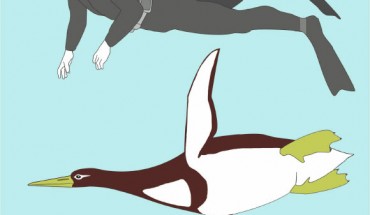
Paleontologists have found the fossil remains of a giant prehistoric penguin that lived about 59 to 56 million years ago (Paleocene epoch) in what is now New Zealand. Artististic reconstruction of the Paleocene giant penguin Kumimanu biceae. Image credit: Senckenberg Research Institute. The giant penguin’s remains were found in the Otago region on New Zealand’s South Island. “Age datings reveal that the bird lived during the Late Paleocene,...

Dec 13, 2017 by News Staff

According to a study published in the Journal of Abnormal Psychology, heavier alcohol use may delay sleep timing among heavy-drinking young adults; in...

Dec 13, 2017 by News Staff

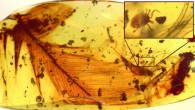
Preserved in 99 million-year-old Burmese amber paleontologists found a tick grasping a dinosaur feather. The discovery, reported in the journal Nature...

Dec 12, 2017 by News Staff

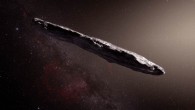
The Breakthrough Listen initiative — the largest ever scientific research program aimed at finding evidence of alien civilizations — announced...

Dec 12, 2017 by News Staff

Data collected by Juno during its first pass over Jupiter’s mysterious, roiling storm called the Great Red Spot in July 2017 indicate that this famous...

Dec 12, 2017 by Natali Anderson

The silky anteater (Cyclopes didactylus) has previously been recognized to be a single species divided into several sub-species. But a new genetic analysis,...

Dec 12, 2017 by News Staff

The build-up of urea, also known as carbamide, in the brain to toxic levels can cause brain damage — and eventually dementia, according to new research. An...

Dec 11, 2017 by News Staff

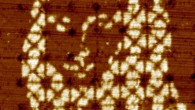
A team of scientists at Caltech has created the smallest version of the Mona Lisa ever — out of DNA. The work is described in a paper appearing in...

Dec 11, 2017 by News Staff

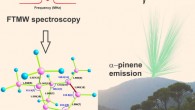
An international team of scientists from France and Spain has accurately determined the gas-phase structure of alpha-pinene, a molecule emitted into the...

Dec 11, 2017 by News Staff

New research led by a University of Illinois physicist has proved the existence of a new form of matter — ‘excitonium,’ a solid crystal of excitons....

Dec 11, 2017 by News Staff

A diet that makes one individual lean and healthy might have the complete opposite effect on another, according to a new study published in the journal...

Dec 11, 2017 by News Staff

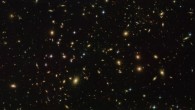
The NASA/ESA Hubble Space Telescope has captured a striking image of a rich cluster of galaxies called Abell 2163. This Hubble image shows Abell 2163,...

Dec 10, 2017 by News Staff

A team of researchers at the University of St Andrews has discovered how New Caledonian crows (Corvus moneduloides) make one of their most sophisticated...

Dec 8, 2017 by News Staff

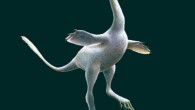
Paleontologists have discovered what they say is a completely unexpected semi-aquatic theropod dinosaur that lived 75 million years ago in what is now...

Dec 8, 2017 by News Staff

A sudden flare from a low-mass black hole in the binary system V404 Cygni has offered astrophysicists a unique opportunity to make precise measurements...

Dec 8, 2017 by Natali Anderson

The microbial community composition on the International Space Station (ISS) is more similar to home surfaces than to the human microbiome samples, according...

Dec 8, 2017 by Enrico de Lazaro

A team of researchers from the Institute of Chinese Materia Medica, China Academy of Chinese Medical Sciences, and the Amway Botanical Research Center...

Dec 7, 2017 by News Staff

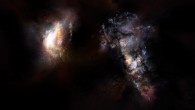
New observations with the Atacama Large Millimeter/submillimeter Array (ALMA) push back the epoch of massive-galaxy formation even further by identifying...

Dec 7, 2017 by News Staff

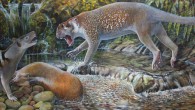
Paleontologists have discovered a new species of carnivorous marsupial lion that lived 26 to 18 million years ago (late Oligocene to early Miocene) in...

Dec 7, 2017 by News Staff

On Mars, phyllosilicate (clay) minerals are widespread in terrains that date back to the Noachian period, 4.1 to 3.7 billion years ago. Phyllosilicates...