News

Aug 10, 2020 by News Staff

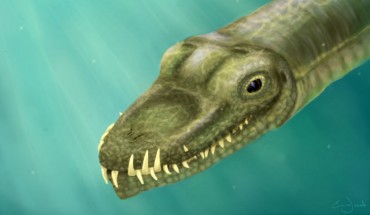
Tanystropheus hydroides, the newly-described species of reptile that lived 242 million years ago (Triassic period), was about 6 m (20 feet) long, with the neck making up half of that length — three times as long as its torso. Tanystropheus hydroides. Image credit: Emma Finley-Jacob. One of the most remarkable Triassic reptiles, Tanystropheus is characterized by an extraordinarily long and stiffened neck that is almost three times the length...

Aug 10, 2020 by Natali Anderson

The trojan asteroid (3548) Eurybates, one of the targets of NASA’s upcoming Lucy mission, has a tiny moon. This image of Eurybates and its moon (circled)...

Aug 10, 2020 by News Staff

According to a new review of previous studies, published July 29 in the Journal of Psychiatry and Neuroscience, depression is linked to areas of the brain...

Aug 10, 2020 by News Staff

The NASA/ESA Hubble Space Telescope has delivered an unrivalled snapshot of the highly distorted barred spiral galaxy NGC 1614. This Hubble image shows...

Aug 7, 2020 by News Staff

In a new study published in the journal PLoS Genetics, researchers analyzed the genomes of two Neanderthals, a Denisovan, and two African humans; and found...

Aug 7, 2020 by News Staff

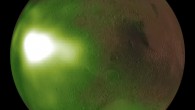
Using new data from the Imaging Ultraviolet Spectrograph (IUVS) on NASA’s MAVEN (Mars Atmosphere and Volatile Evolution) spacecraft, scientists have...

Aug 7, 2020 by News Staff

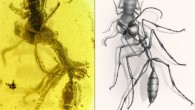
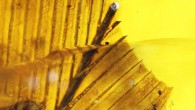
Paleontologists have found trapped in a piece of Burmese amber a unique scene of a prehistoric ‘hell ant’ (subfamily Haidomyrmecinae) attacking a nymph...

Aug 7, 2020 by News Staff

A new study suggests that during Jupiter’s violent storms, hailstones form from a cooled mixture of water and ammonia gas, similar to the process in...

Aug 6, 2020 by News Staff

Taking advantage of a total lunar eclipse in January 2019, astronomers using the NASA/ESA Hubble Space Telescope have measured the amount of ozone in the...

Aug 6, 2020 by News Staff

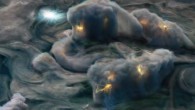
An unexpected form of electrical discharge, ‘shallow lightning’ originates from Jovian clouds containing an ammonia-water solution, according to a...

Aug 6, 2020 by News Staff

Physicists from the ATLAS (A Toroidal LHC ApparatuS) and CMS (Compact-Muon-Solenoid) collaborations at CERN’s Large Hadron Collider have reported strong...

Aug 6, 2020 by News Staff

The heliosphere is a giant magnetic bubble that contains our Solar System, the solar wind and the solar magnetic field. Outside the heliosphere is the...

Aug 6, 2020 by News Staff

An international team of researchers has sequenced and analyzed the genome of the tuatara (Sphenodon punctatus), the only living member of the reptilian...

Aug 5, 2020 by News Staff

NASA’s Curiosity rover has seen a lot since August 5, 2012, when it first set its wheels inside the huge basin of Gale Crater. Curiosity rover took this...

Aug 5, 2020 by News Staff

Astronomers have for the first time used X-ray imaging to examine a calcium-rich supernova. Their findings, published in the Astrophysical Journal, show...

Aug 5, 2020 by Natali Anderson

Astronomers using NSF’s Very Long Baseline Array, a continentwide system of 10 radio telescope antennas located between Hawaii and Puerto Rico, have...

Aug 5, 2020 by Enrico de Lazaro

Archaeologists from the Pennsylvania State University and the Université libre de Bruxelles have found a stone offering box near a reef close to the north-eastern...

Aug 4, 2020 by News Staff

A team of mycologists from Oregon State University, the USDA Forestry Sciences Laboratory and Michigan State University has discovered a new species of...

Aug 4, 2020 by News Staff

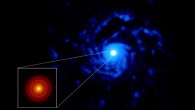
Astronomers using the Atacama Large Millimeter/submillimeter Array (ALMA) have discovered a giant set of spiral arms around the young variable star RU...

Aug 4, 2020 by Natali Anderson

The partial skeletal remains of an enantiornithine bird that lived 99 million years ago (Cretaceous period) have been found preserved in a piece of amber...