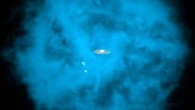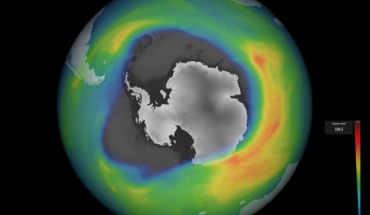
The Antarctica’s ozone hole has now reached its maximum size, according to an analysis of data collected by ESA’s Copernicus Sentinel-5P satellite. This year’s ozone hole over Antarctica is one of the largest in recent years. Image credit: ESA. Each year for the past few decades during the southern hemisphere spring, chemical reactions involving chlorine and bromine cause ozone in the southern polar region to be destroyed rapidly and severely....