News

Jan 14, 2021 by News Staff

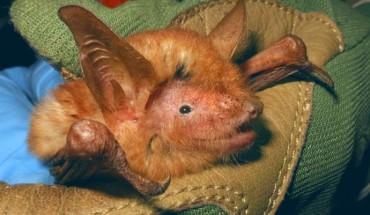
An international team of researchers has discovered a new dichromatic species of bat in the Guinean Nimba Mountains belonging in the genus Myotis. An artist’s impression of Myotis nimbaensis. Image credit: Patricia Wynne. Myotis is the most speciose genus of bats with over 120 living species and a range that covers most of the world. These bats are primarily insectivorous and range from tiny species that weigh only a few grams (e.g., Myotis elegans,...

Jan 14, 2021 by News Staff

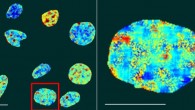
A team of scientists from the United Kingdom and Spain has demonstrated that a technique called fluorescence lifetime imaging microscopy in conjunction...

Jan 13, 2021 by Natali Anderson

Astronomers using NASA’s Transiting Exoplanet Survey Satellite and the High Resolution Echelle Spectrometer on the Keck I telescope at the W. M. Keck...

Jan 13, 2021 by News Staff

An active galactic nucleus in the center of ESO 253-G003, an active galaxy over 570 million light-years away in the southern constellation of Pictor, erupts...

Jan 13, 2021 by Enrico de Lazaro

A new species of small vulture that lived during the Quaternary period in the Greater Antilles has been identified from fossils found in western Cuba. Hypothetical...

Jan 13, 2021 by News Staff

New research led by the University of Helsinki suggests that dog domestication needs to be understood in terms of competition over resources in the particularly...

Jan 13, 2021 by Enrico de Lazaro

In a study published recently in the journal Nutrients, oolong tea and pure caffeine increased fat breakdown by about 20% in the healthy volunteers; oolong...

Jan 12, 2021 by News Staff

Paleontologists have described the first three-dimensional preservation of soft tissue in Namacalathus hermanastes, a skeletal metazoan (multicellular...

Jan 12, 2021 by News Staff

Astronomers using the Atacama Large Millimeter/submillimeter Array (ALMA) have discovered a massive starburst galaxy with a tail of star-forming gas in...

Jan 12, 2021 by News Staff

Astronomers using NASA’s Chandra X-ray Observatory have studied Swift J1818.0-1607, a new magnetar (a type of neutron star with an extremely powerful...

Jan 12, 2021 by News Staff

A team of physicists from the United States and Japan has experimentally observed a phenomenon called quantum oscillation in a two-dimensional topological...

Jan 12, 2021 by News Staff

A spectacular new image, taken with the Nicholas U. Mayall 4-m Telescope at Kitt Peak National Observatory, shows the spiral galaxy NGC 1003 and a collection...

Jan 11, 2021 by Enrico de Lazaro

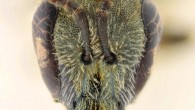
An international team of scientists has discovered a new species of the bee genus Lasioglossum living in sand dunes in Israel. Head of a female of Lasioglossum...

Jan 11, 2021 by News Staff

An international team of archaeologists and paleoanthropologists has discovered a large collection of 2-million-year-old stone tools, fossilized bones...

Jan 11, 2021 by Enrico de Lazaro

Using the Multi Unit Spectroscopic Explorer (MUSE) instrument on the Very Large Telescope (VLT) at ESO’s Paranal Observatory, astronomers have imaged...

Jan 11, 2021 by Natali Anderson

NGTS-14Ab, an alien world slightly larger than Neptune orbiting around an orange dwarf in the binary system NGTS-14, joins a growing number of exoplanets...

Jan 11, 2021 by Enrico de Lazaro

Astronomers using the NASA/ESA Hubble Space Telescope have captured the most detailed image so far of the central part of the barred spiral galaxy NGC...

Jan 8, 2021 by News Staff

A team of researchers from Germany, Denmark and the United Kingdom has identified circadian rhythms in non-photosynthetic, Gram-positive bacterium Bacillus...

Jan 8, 2021 by Enrico de Lazaro

New observations from NASA’s Transiting Exoplanet Survey Satellite (TESS) have revealed the presence of high-speed jets, zonal circulation and polar...

Jan 8, 2021 by Enrico de Lazaro

Paleontologists from the Royal Ontario Museum and the University of Toronto have found and examined the fossilized remains of two subadult and one adult...