News

Oct 15, 2021 by News Staff

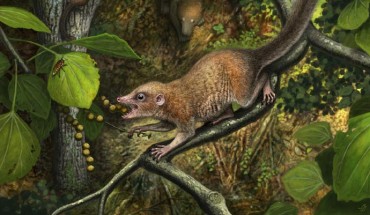
The end-Cretaceous mass extinction 66 million years ago was characterized by a worldwide ecological catastrophe and rapid species turnover. Arboreal (tree-dwelling) species were especially at risk of extinction due to large-scale devastation of forested environments caused by wildfires from the Chicxulub asteroid impact. New research led by Cornell University and University of Cambridge scientists reveals that most of the surviving mammals did not...

Oct 15, 2021 by News Staff

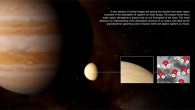
Observations by the NASA/ESA Hubble Space Telescope in far-ultraviolet light of Jupiter’s icy moons were used in the past to detect molecular oxygen...

Oct 14, 2021 by News Staff

Astronomers using the new Five-hundred-meter Aperture Spherical radio Telescope (FAST) have detected 1,652 independent burst events from the FRB 121102...

Oct 14, 2021 by News Staff

Physicists have performed an improved measurement of the free neutron lifetime using the UCNτ apparatus at the Los Alamos Neutron Science Center. Their...

Oct 14, 2021 by News Staff

The Type Ia supernova remnant (SNR) G344.7-0.1 resides about 19,600 light-years away in the constellation of Scorpius. This composite image shows SNR G344.7-0.1...

Oct 14, 2021 by News Staff

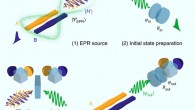
Quantum teleportation of an unknown input state from an outside source onto a quantum node is considered one of the key components of long-distance quantum...

Oct 13, 2021 by News Staff

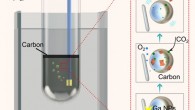
A team of researchers led by the University of New South Wales has discovered that suspensions of gallium liquid metal — a soft, silvery-white metal...

Oct 13, 2021 by News Staff

Using the Spectro-Polarimetric High-contrast Exoplanet REsearch (SPHERE) instrument mounted on ESO’s Very Large Telescope (VLT), astronomers have conducted...

Oct 13, 2021 by News Staff

An ancient wine production complex — the largest known in the world from the Byzantine period — has been discovered by a team of archaeologists...

Oct 13, 2021 by News Staff

Astronomers using the Low Frequency Array (LOFAR), a large radio telescope network located mainly in the Netherlands, have detected coherent low-frequency...

Oct 13, 2021 by News Staff

A team of biologists from the University of Surrey, the MRC Laboratory for Molecular Biology, Wake Forest University and the École Centrale de Lyon has...

Oct 12, 2021 by News Staff

An international team of scientists has analyzed a diverse set of presolar grains with the goal of realizing their true stellar origins. Palmerini et al....

Oct 12, 2021 by News Staff

The Cronica universalis, written in Latin by the Milanese friar Galvaneus Flamma (in Italian, Galvano Fiamma, 1283 – c. 1345), contains an astonishing...

Oct 12, 2021 by News Staff

Astronomers using CSIRO’s ASKAP and South African Radio Astronomy Observatory’s MeerKAT radio telescopes have discovered and characterized ASKAP J173608.2-321635,...

Oct 11, 2021 by News Staff

In the genome of Homo sapiens, about 98% of DNA sequences are non-coding regions that were previously disregarded as ‘junk DNA.’ In fact, junk DNA...

Oct 11, 2021 by News Staff

Dr. John Healy, a marine biologist at the Queensland Museum, the University of Queensland, and the Field Museum of Natural History, has described a new...

Oct 11, 2021 by Enrico de Lazaro

A new genus and species of mixopterid eurypterid (sea scorpion) has been identified from several fossil specimens found in the Xiushan Formation, China. Life...

Oct 11, 2021 by Enrico de Lazaro

New research by scientists from Germany and the United Kingdom shows that daily mental training for 3 to 6 months can buffer the long-term systemic stress...

Oct 11, 2021 by Enrico de Lazaro

Astronomers using the NASA/ESA Hubble Space Telescope have captured this vivid image of a spiral galaxy called LEDA 42975. This Hubble image shows the...

Oct 8, 2021 by News Staff

Planetary scientists have analyzed images taken by the Mastcam-Z camera and the Remote Micro-Imager of the SuperCam instrument on NASA’s Perseverance...