News

Oct 11, 2022 by News Staff

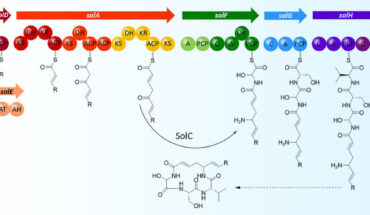
Solanimycin, which is produced by Dickeya solani, the enterobacterial pathogen of potato, is active against a broad range of plant-pathogenic fungi and the human pathogen Candida albicans. Model for the structure of the first enzyme-free precursor of solanimycin. Image credit: Matilla et al., doi: 10.1128/mbio.02472. Many important drugs for treating microbial infections are derived from natural products produced by microorganisms. In an era of increasing...

Oct 10, 2022 by Sergio Prostak

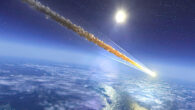
Both the first and second interstellar meteors, IM1 and IM2, are outliers in material strength and may have originated in supernova explosions, according...

Oct 10, 2022 by News Staff

The subsurface of Mars during the Noachian period was likely to have been habitable for microorganisms that feed on hydrogen and produce methane, according...

Oct 10, 2022 by Natali Anderson

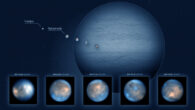
Astronomers using the Spectro-Polarimetric High-contrast Exoplanet REsearch (SPHERE) instrument on ESO’s Very Large Telescope have imaged Jupiter’s...

Oct 10, 2022 by News Staff

New research led by the global research-for-development organization Bioversity International confirms that the genomes of today’s domesticated banana...

Oct 10, 2022 by Enrico de Lazaro

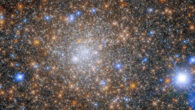
Terzan 1 is a globular cluster about 21,800 light-years from Earth in the constellation of Scorpius. This Hubble image shows Terzan 1, a globular cluster...

Oct 9, 2022 by News Staff

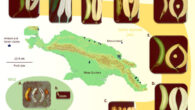
Paleontologists have re-examined the remains of extinct, large-bodied marsupials recovered from Pleistocene-aged layers of Nombe Rockshelter in the highlands...

Oct 7, 2022 by News Staff

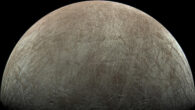
These images of Jupiter’s icy moon Europa were taken by the JunoCam instrument aboard NASA’s Juno spacecraft during a close approach on September 29,...

Oct 7, 2022 by Natali Anderson

Biologists have described two new tardigrade genera and associated species — two of which are new to science — from the mountain glaciers of...

Oct 7, 2022 by News Staff

About 66 million years ago, a massive asteroid crashed into Earth near the site of the small town of Chicxulub in what is now Mexico. This impact coincides...

Oct 6, 2022 by News Staff

During excavations at the ancient Hellenistic-Roman port of Berenike on the Red Sea coast of Egypt, an international team of archaeologists has documented...

Oct 6, 2022 by News Staff

This black-and-white image of Jupiter’s icy moon Europa was taken by the Stellar Reference Unit (SRU) instrument on board NASA’s Juno orbiter during...

Oct 6, 2022 by Natali Anderson

Horseshoe crabs, or xiphosurans, are an order of marine and brackish water arthropods. Despite their common name, they are not really crabs, and are more...

Oct 6, 2022 by News Staff

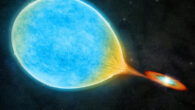
ZTF J1813+4251 is a 51-minute-orbital-period, fully eclipsing binary system consisting of a star with a temperature comparable to that of the Sun but...

Oct 6, 2022 by News Staff

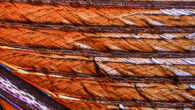
Scientists have investigated the effects of surface crude oil on the feather structure of the Manx shearwater (Puffinus puffinus), a species of seabird...

Oct 5, 2022 by News Staff

Dust is a key ingredient in both observed and physical properties of galaxies. It obscures and scatters stellar light, and enables star formation by acting...

Oct 5, 2022 by Enrico de Lazaro

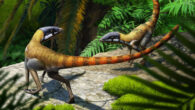
Paleontologists have created the first accurate skeletal reconstruction of Scleromochlus taylori, a small species of reptile that lived during the Triassic...

Oct 5, 2022 by News Staff

The Stephan’s Quintet, the Cartwheel Galaxy, the galaxy cluster SMACS J0723.3-7327, and the Carina Nebula were among the first publicly released images...

Oct 5, 2022 by News Staff

Nitrous oxide (also known as laughing gas) — a product of microbial nitrogen metabolism — is a compelling exoplanet biosignature gas with distinctive...

Oct 5, 2022 by Enrico de Lazaro

About 66 million years ago, a massive asteroid crashed into Earth near the site of the small town of Chicxulub in what is now Mexico. The impact eradicated...