News

Oct 4, 2023 by News Staff

Our species, Homo sapiens, dispersed from Africa into Eurasia multiple times in the Middle and Late Pleistocene. According to new research led by Shantou University scientists, the now arid zone of the Eastern Mediterranean was once green savannahs and grasslands that provided an ideal passage for these migrations. Abbas et al. support the growing consensus for a well-watered Jordan Rift Valley that funneled migrants into western Asia and northern...

Oct 4, 2023 by Enrico de Lazaro

Astronomers using the NASA/ESA/CSA James Webb Space Telescope have captured stunning new images of the Orion Nebula, a diffuse nebula located approximately...

Oct 4, 2023 by News Staff

Revealed by 3D seismic imaging, the newly-discovered water reservoir lies 3.2 km (2 miles) under the ocean floor off the coast of New Zealand, where it...

Oct 4, 2023 by Enrico de Lazaro

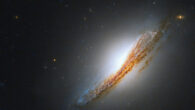
NASA has released a beautiful photo taken by the Hubble Space Telescope of the lenticular galaxy NGC 612. This Hubble image shows NGC 612, a lenticular...

Oct 3, 2023 by News Staff

The 5-km-long mounds that dominate the appearance of the larger lobe of Kuiper Belt object (486958) Arrokoth are similar enough to suggest a common origin,...

Oct 3, 2023 by News Staff

The ecological origin and early evolution of snakes has long been a focus of multiple research fields and remains one of the most enduring and controversial...

Oct 3, 2023 by News Staff

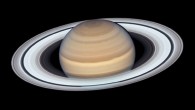
Saturn’s rings could have evolved from the debris of two progenitor icy moons that collided and shattered a few hundred million years ago; debris that...

Oct 3, 2023 by Sergio Prostak

Tea, a beverage consumed extensively worldwide, has been reported to be associated with substantial health benefits, including a reduced risk of cardiovascular...

Oct 3, 2023 by Enrico de Lazaro

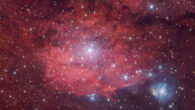
There are two different types of nebulae in this new image from the OmegaCAM instrument on ESO’s VLT Survey Telescope (VST) at Paranal Observatory in...

Oct 2, 2023 by Natali Anderson

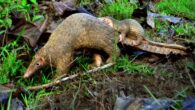
The newly-identified species, Manis mysteria, is the ninth known pangolin species or the fifth Asian one. The Asian mysterious pangolin (Manis mysteria)...

Oct 2, 2023 by News Staff

Researchers from the University of Surrey and elsewhere have found that young people (24 years and youger) spend an average of six hours a day online;...

Oct 2, 2023 by Enrico de Lazaro

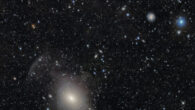
Astronomers using the Dark Energy Camera (DEC) on NSF’s Víctor M. Blanco 4-m telescope at Cerro Tololo Inter-American Observatory, a Program of NSF’s...

Oct 2, 2023 by Enrico de Lazaro

The newly-discovered fossilized specimen of Bohemolichas incola, a species of trilobite that lived during the Ordovician period, provides by far the most...

Oct 2, 2023 by Enrico de Lazaro

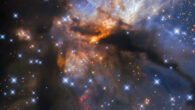
At least one B-type star — the second most massive type — lurks within a star-forming region called G35.2-0.7N, and a powerful protostellar...

Sep 29, 2023 by Simon Braddy

The Waukesha Biota, a 437-million-year-old fossil assemblage from Wisconsin, USA, provides a rare glimpse into life in an ancient lagoon. In his book Wonderful...

Sep 29, 2023 by Enrico de Lazaro

Researchers from the Universidad del Rosario, the Universidad Nacional de Colombia, Smithsonian Tropical Research Institute, the Field Museum of Natural...

Sep 29, 2023 by News Staff

Physicists from the ALPHA Collaboration at CERN’s Antimatter Factory have demonstrated the existence of gravity between antimatter and Earth, reaffirming...

Sep 28, 2023 by Enrico de Lazaro

Paleontologists have unearthed the fossilized remains of a new species of the mekosuchine crocodilian genus Baru in the Alcoota Scientific Reserve, about...

Sep 28, 2023 by Enrico de Lazaro

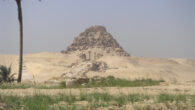
Sahure, also known as Sahura, was the second ruler of ancient Egypt’s Fifth Dynasty (c. 2465 – c. 2325 BCE). The pyramid of Sahure at Abusir, Egypt. The...

Sep 28, 2023 by Enrico de Lazaro

A paper published today in the Zoological Journal of the Linnean Society announces the discovery of Garumbatitan morellensis, a previously undocumented...