News

Dec 19, 2023 by News Staff

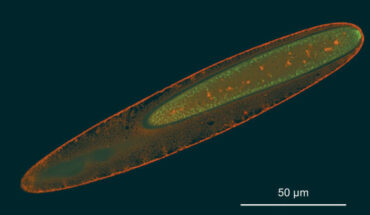
Giant bacteria are intriguing, underexplored biological enigmas. Many well-studied giants use abundant internal small-molecule stores and/or light to satisfy their oversized energy demands. However, the ways giant heterotrophs (organisms that cannot produce its own food, instead taking nutrition from other sources of organic carbon) fulfill their expanded needs remain elusive. Bacteria of the genus Epulopiscium are intestinal symbionts of tropical...

Dec 19, 2023 by News Staff

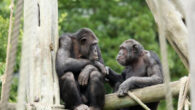
While human social memory lasts decades and tracks relationships, less is known about non-human ape long-term memory. In a new paper published in the Proceedings...

Dec 19, 2023 by News Staff

Reconstructing the behavior of Earth’s magnetic field during archaeological periods is crucial for both achieving a better understanding of the field...

Dec 18, 2023 by News Staff

The mouse is the most commonly used vertebrate experimental model in neuroscience research, and the new atlas paves the way for a greater understanding...

Dec 18, 2023 by Enrico de Lazaro

New images from the Near-Infrared Camera (NIRCam) instrument onboard the NASA/ESA/CSA James Webb Space Telescope shows Uranus, its ring system and some...

Dec 18, 2023 by News Staff

A team of physicists at the Rheinland-Pfälzische Technische Universität Kaiserslautern-Landau has produced pure trilobite molecules in rubidium over...

Dec 18, 2023 by News Staff

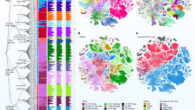
The Long Interspersed Element-1 (LINE-1) retrotransposon is an ‘ancient genetic parasite’ that has written around one third of the human genome through...

Dec 18, 2023 by Enrico de Lazaro

A dazzling new photo from the NASA/ESA Hubble Space Telescope shows the bright spiral galaxy MCG-01-24-014, which is known to host an active galactic nucleus. This...

Dec 17, 2023 by News Staff

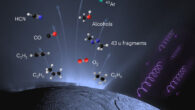
Using data from NASA’s Cassini mission, planetary scientists have detected several compounds of strong importance to the habitability of Saturn’s icy...

Dec 15, 2023 by Enrico de Lazaro

New archaeological discoveries from Mongolia show that, despite a fragmentary archaeological record, horse cultures of the eastern Eurasian steppe were...

Dec 15, 2023 by News Staff

Astronomers from NASA and the University of Washington have estimated total internal heating rates and depths to possible subsurface oceans for 17 planets...

Dec 14, 2023 by Enrico de Lazaro

Removing the hydrogen-rich layers from a main sequence star exposes the helium-rich core. Such stripped helium stars are known at high and low masses,...

Dec 14, 2023 by Natali Anderson

Chia (Salvia hispanica) is one of the most popular nutrition-rich foods and pseudocereal crops of the mint family Lamiaceae. Chia seeds are a rich source...

Dec 14, 2023 by News Staff

When the ancestors of modern Eurasians migrated out of Africa and interbred with Eurasian archaic hominins, namely Neanderthals and Denisovans, DNA of...

Dec 13, 2023 by News Staff

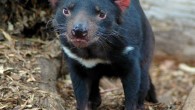
New research from the University of Tasmania also confirms a significant, fundamental morphological difference found in Tasmanian devils (Sarcophilus harrisii)...

Dec 13, 2023 by Natali Anderson

The newly-discovered brown dwarf has an estimated mass of 3-4 Jupiter masses, making it a strong contender for the least massive free-floating brown dwarf...

Dec 13, 2023 by News Staff

Archaeologists in Israel have identified a very rare Canaanite inscription on fragments of a pottery jar from the reign of King David (10th century BCE). The...

Dec 13, 2023 by News Staff

The Whale-SETI team, which includes researchers from the SETI Institute, University of California Davis and the Alaska Whale Foundation, has been studying...

Dec 12, 2023 by Enrico de Lazaro

Potteromyces asteroxylicola parasitized on an extinct species of lycopsid plant called Asteroxylon mackiei, according to a paper published in the journal...

Dec 12, 2023 by Enrico de Lazaro

A new genus and species of mosasaurine mosasaur being named Megapterygius wakayamaensis has been identified from a largely complete skeleton found in Wakayama...